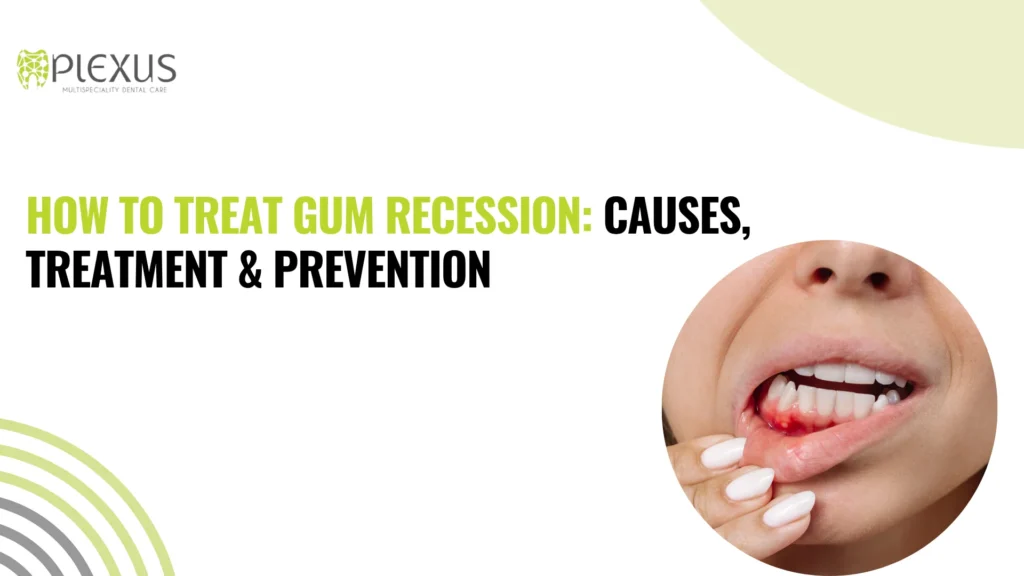
Have you ever noticed your front teeth appearing longer than usual or have started to experience sudden teeth sensitivity? It could be a sign of a gum recession.
What Is Gum Recession?
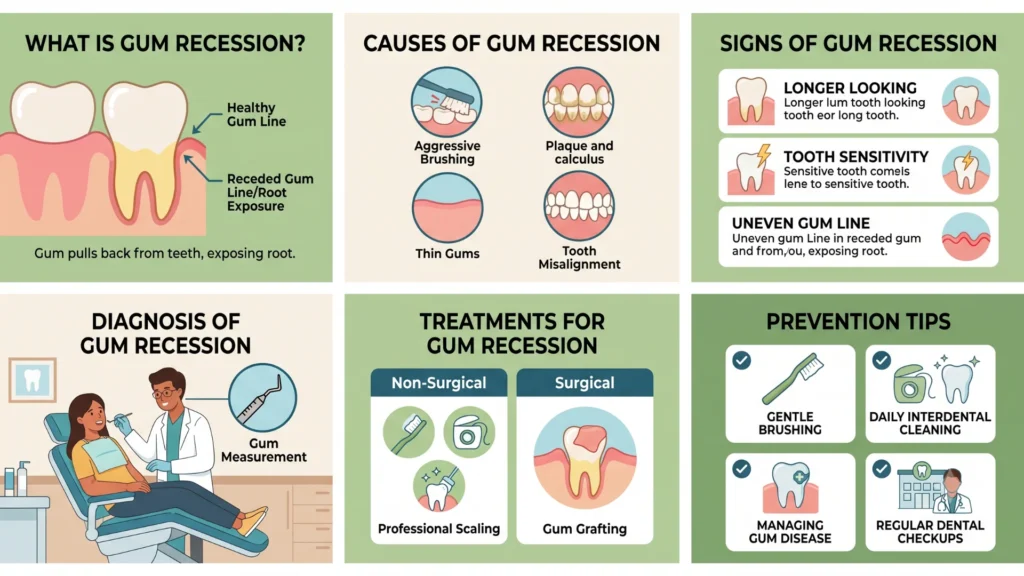
Gum recession is a process where the margin of the gum tissue around the tooth wears away or pulls back resulting in pocket-formation or gap between the gum and teeth. The pockets and gaps thus created harbours more bacteria that can further damage the surrounding supporting tissue and bone, eventually leading to tooth loss.
Gum recession is a common dental problem and most of the people don’t realize that they have receding gums since it occurs gradually. The first recognizable sign is when they feel their tooth appearing longer or start experiencing sudden sensitivity. If you notice signs of gum recession, consult a trusted dental clinic in Andheri West for a professional evaluation.
Table of Contents
What Are the Causes of the Gum Recession?
Aggressive Brushing
Hard brushing or using hard-bristle brush results in wearing down of enamel and thinning out of the gingiva.
Gum Disease
Existing gum diseases like gingivitis and periodontitis result in loss of gingival attachment to the tooth. This leads to pocket formation and pulling away of the gums thus causing gum recession.
You can learn more about gum disease treatment to understand how gum disease can be managed.
Thin Gum Tissue
Thin gum tissue is very vulnerable to trauma and inflammation. They react aggressively to hard brushing and present subgingival plaque thus accelerating pulling away of the gumline.
Improper Brushing Technique
Improper brushing techniques can injure the gums and may also result in ineffective plaque removal. All this results in gum thinning and inflammation causing gum recession.
Tooth Position
When a tooth is abnormally positioned outside the dental arch, its root extends past the jawbone. In cases of crowding, tilting and protrusion; the teeth might be covered with an ultrathin layer of bone and thin gingival tissue. This thin gingival tissue is prone to migrate downwards even under standard brushing pressure.
Frenum Attachments
A frenum is a muscular fold that attaches the lip to the gums and is present on the upper and lower jaw. When the frenum is attached too close to the gums it creates a pulling pressure on the gums every time the lips move. This leads to pulling away of the gums.
A thick frenal attachment also makes toothbrushing in that area difficult causing recession due to plaque induced inflammation.
Signs You May Have Gum Recession
Longer Looking Teeth
Your front teeth might appear longer than before because of a recessed gum line.
Tooth Sensitivity and Visible Root Surface
Gum recession exposes the root surfaces of the teeth. Once exposed these root surfaces appear darker or yellower compared to the above tooth surface. Since the exposed root surfaces lack enamel, the tooth becomes more sensitive to hot, cold or sweet food items.
Uneven Gumline
Once the gum starts to recede from its original margin, the gum line begin to appear uneven or deep indentation can be seen on the gum where the tooth meets the gum.
Bleeding and Inflammation
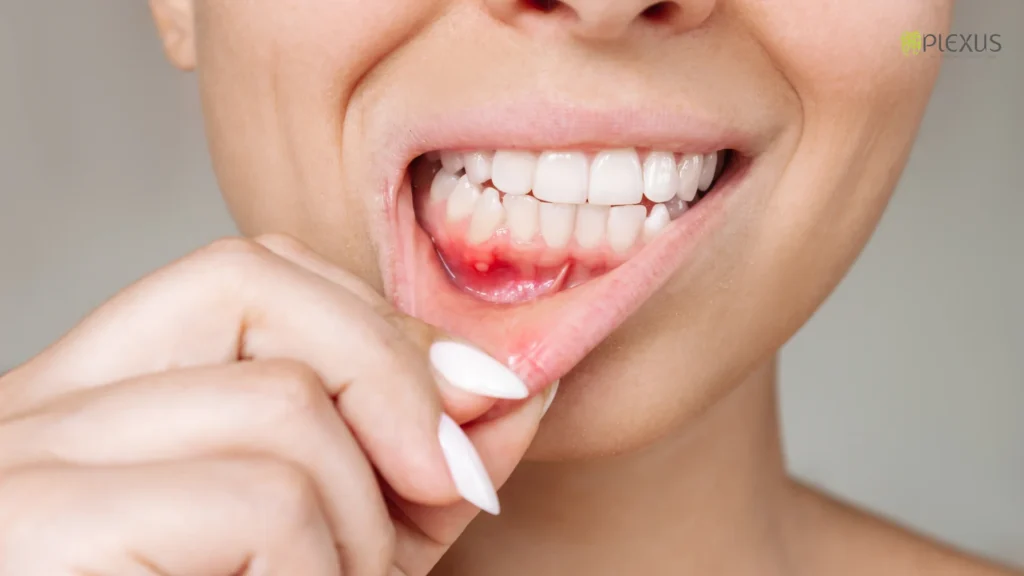
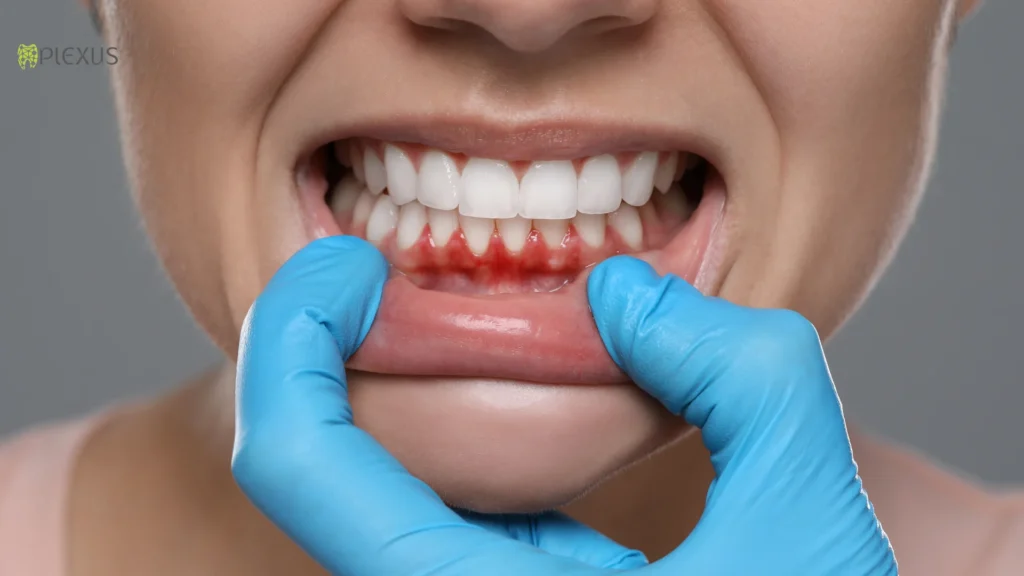
Plaque-induced gum recession mostly appears to have puffy, swollen, reddish and bleeding gums. This is because of Inflammed gum tissue caused by bacterial infection. The gums may be associated with pocket-formation around the tooth. If you experience persistent bleeding, learn more about bleeding gums treatment.
Tooth Mobility
With progressive gum recession, the supporting tissue around the tooth is affected resulting in bone loss. Over a period of time this bone loss can cause tooth mobility or loose tooth.
How Is Gum Recession Diagnosed?
Gum recession is either self-diagnosed by the patient or detected by a dentist during a routine dental check-up. Your dentist might perform some of the following tests to assess the severity of recession:
Gum thickness measurement
Periodontal pocket assessment
Checking bone support where required
Identifying the underlying cause
How to Treat Gum Recession?
Treatment for gum recession can be widely differentiated into non-surgical and surgical options.
Non-Surgical Management
Correct Brushing Technique
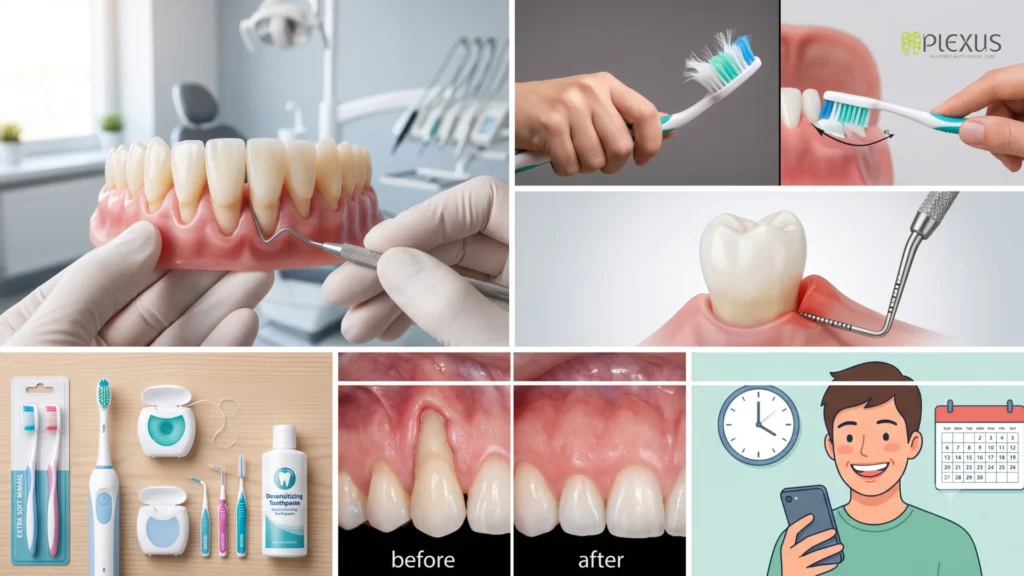
Change your brush to a soft bristle brush to avoid trauma during brushing. Use the Correct brushing technique making sure that the brush cleans all the surfaces of the teeth to reduce plaque retention. Also include interdental cleaning aids like floss and water irrigators to improve oral hygiene.
Professional Dental Cleanups
For minor gum recession or pockets, regular professional cleanups help to keep the plaque bacteria under control before they cause significant damage to the gum tissues.
Sensitivity Management
Tooth colored restorative fillings like composites are placed over the exposed root surfaces to manage sensitivity and improve the overall esthetics of the tooth.
Surgical Management
In cases of severe gum recession, a surgical procedure called gum grafting would be required. Gum grafting helps to cover up the exposed root surfaces and also increase the gum thickness. This surgical procedure is performed by a Periodontist.
For maintaining healthy gums and teeth, include foods for healthy teeth as part of a balanced diet.
Clinical Scenario - Gum Recession Treatment
Since there are multiple causative factors for gum recession, not every case can be treated the same way.
For example:-
1) Gum recession caused due to traumatic brushing.
A patient complains of gum recession in his lower front teeth which is caused due to aggressive hard brushing. On clinical examination,there is no sign of gum disease yet the gums have moved down apically.
Clinical approach:-
Since the causative factor is traumatic brushing, the first priority would be to advice the patient to shift to a soft or ultrasoft toothbrush. Additionally the patient needs to be guided regarding the correct brushing technique. Surgical treatment is only considered if the recession is progressive given issues with sensitivity and aesthetics.
Patient Selection Criteria
Not every patient having gum recession requires gum surgery. Treatment decisions depend on several factors:-
1.Gingival phenotype and thickness
2.Root sensitive
3.Width of keratinized tissue
4.Position of the tooth
5.Aesthetic concerns
6.Presence or absence of periodontal disease
7.Patients’ expectations and ability to maintain oral hygiene
Practitioner Insight:
The main principle to treat gum recession is to identify the causative factor and remove them before proceeding to actually treat the visible recession.
When a patient comes with a complain of gum recession, the clinical should determine the cause of recession.Various factors that can lead to gum recession include wrong brushing technique, using hard toothbrush, plaque formation,tooth position,thin gingival tissue, gum disease and other local factors. Consideration and removal of all these factors should be done before proceeding for any surgical intervention.
What Happens if Gum Recession Is Left Untreated?
Sensitivity
Progressive untreated gum recession can result in root exposure. This in turn causes severe sensitivity which makes eating and drinking even water very painful.
Root Surface Decay
Plaque retention and calculus formation near the gums can lead to root surface decay. Root surface decays would require a restoration or even a root canal in advance stages.
Aesthetic Concerns
Gum recession creates gaps between the teeth and gums thus affecting the overall esthetics. Severe gum recession can cause loosening of teeth and also change the teeth position due to mobility.
How Can You Prevent Further Gum Recession?
Gentle Brushing
Use a soft bristle brush and apply gentle pressure to brush your teeth. This prevents trauma to the gums and teeth.
Daily Interdental Cleaning
Daily brushing along with interdental cleaning helps maintain good oral hygiene. This keeps the gums in a healthy state free of infection and inflammation.
Managing Gum Disease
In case of pre-existing gum problems, treating them becomes a priority to prevent further damage.
Regular Dental Checkups and Cleanups
Routine dental check ups help keep a watch on your gum condition. Regular cleanups help maintain your gums in a stable healthy state.