Are you planning to get your dental implants in India but are confused about the procedure, timeline and costing? At our dental clinic in Andheri West, we help patients understand the dental implant procedure, pricing and treatment timeline so they can plan their treatment smoothly.
This blog will guide you through the procedure,pricing and also help you plan your travel and stay so that you can complete your treatment smoothly.
Table of Contents
How Much Do Dental Implants Cost in Mumbai?
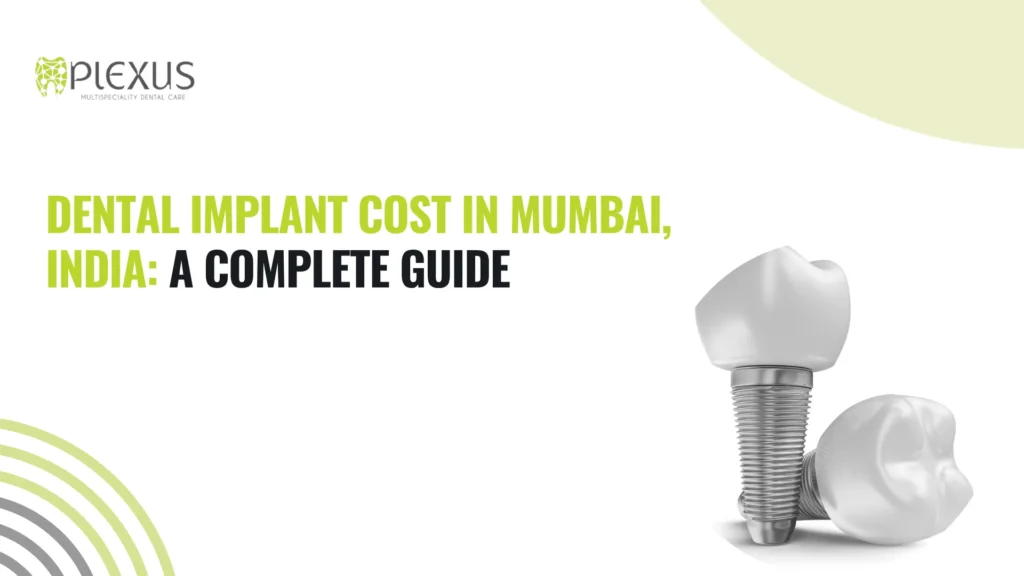
Being a comprehensive treatment, an implant procedure might involve various procedures like tooth extraction, bone grafting, sinus lift, fixture (implant) placement, temporary prosthesis and permanent crown. All these procedures are charged separately depending on their need and case complexity.
A single advertised low-price quotation for an implant does not mean that the entire treatment would complete at a low price. This is because the prices can increase depending on the case. Patients considering treatment can find more information about dental implants in Andheri West, Mumbai
Dental Implant Cost Comparison: India, USA, UAE and UK
Country | Cost | Average cost for single implant |
India | INR | INR 20,000/- To INR 70,000/- |
USA | USD | USD 3,000/- To USD 6,000/- |
UK | GBP | GBP 2,500/- To GBP 4,500/- |
UAE | AED | AED 5,000/- To AED 15,000/- |
It is to be noted that the above mentioned charges only include the charges for a single dental implant and does not include price for crowns and additional surgical procedures.
What Factors Affect the Cost of Dental Implants?
The overall cost of dental implants can be affected by various factors like:
Implant brand
Crown material
Case complexity
Number of implants
Lab charges
Interim temporary teeth or prosthesis
Jaw bone availability
Need for additional surgeries like sinus lifting, bone grafts, ridge augmentation, etc., if required
What Are the Various Types of Implant Services Available?
Before we dive into the actual costing of implants, it is important to know the various types of implant treatments.
1. Single-Tooth Implant
A single missing tooth would require a single implant placement with an individual crown over it.
2. Multiple Missing Teeth
When multiple teeth are missing, it is not necessary that each missing tooth should be replaced by implants. If multiple missing teeth are present in the same region adjacent to each other, then they can be replaced with implant-supported bridges.
In case of multiple missing teeth in separate regions (not adjacent to each other), individual implants would be required for replacement.
3. Full-Mouth Dental Implants
When a completely edentulous mouth needs to be rehabilitated with implants, there are 2 options available. They are All-on-4 or All-on-6 implants per arch.
Depending on the amount of available jaw bone, occlusal forces and bite, either of the suitable options would be chosen. Accordingly, pricing would depend on the final number of implants, surgical complexity, and need for additional surgical procedures.

What Are the Different Implant Materials Available?
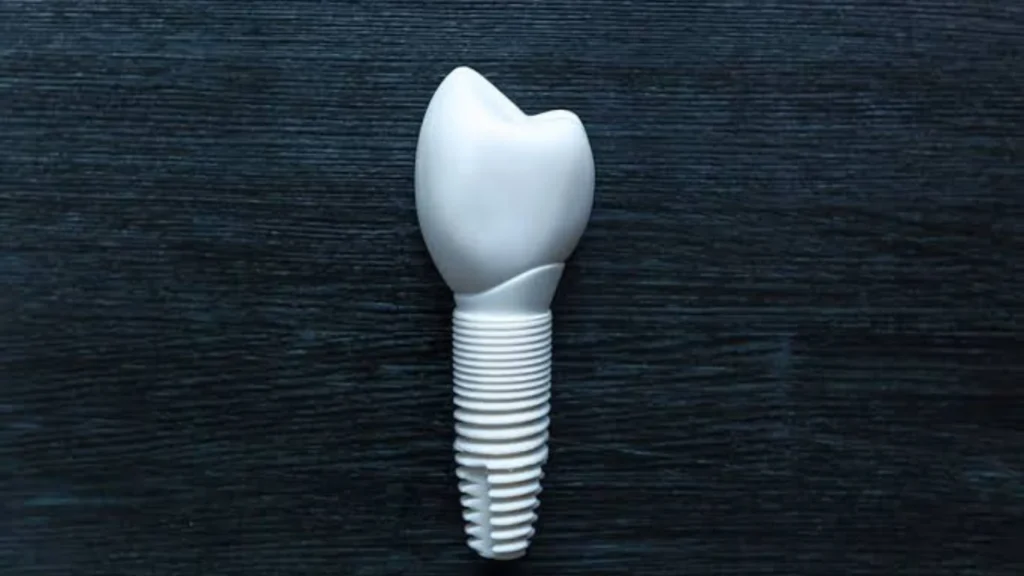
Before we dive into the different types of implant treatments, it is important to understand how dental implants work and the various treatment options available. Implants can be majorly classified into 2 types depending on material. They are titanium and zirconia.
1. Titanium
Titanium implants are commercially made pure titanium or titanium alloy implants. Titanium has years of long clinical trials available, which is biocompatible in nature and integrates to the jawbone.
Most of the implant systems are titanium-based. Titanium is known to have favorable strength and fatigue resistance. Since it is available in various sizes and designs, it is most commonly used due to ease of treatment planning.
2. Zirconia
Zirconia implants are made of high-strength ceramic called zirconium dioxide. Zirconium implants are used in specific cases where the patient prefers a metal-free option.
These implants are highly aesthetic as they are metal-free. Since these implants are ceramic-based, they have different fracture characteristics and are used in limited cases. There are also very few systems that provide zirconia implants.
Dental Tourism in Mumbai: A Practical Guide for Overseas Patients
Things to Know Before Travelling
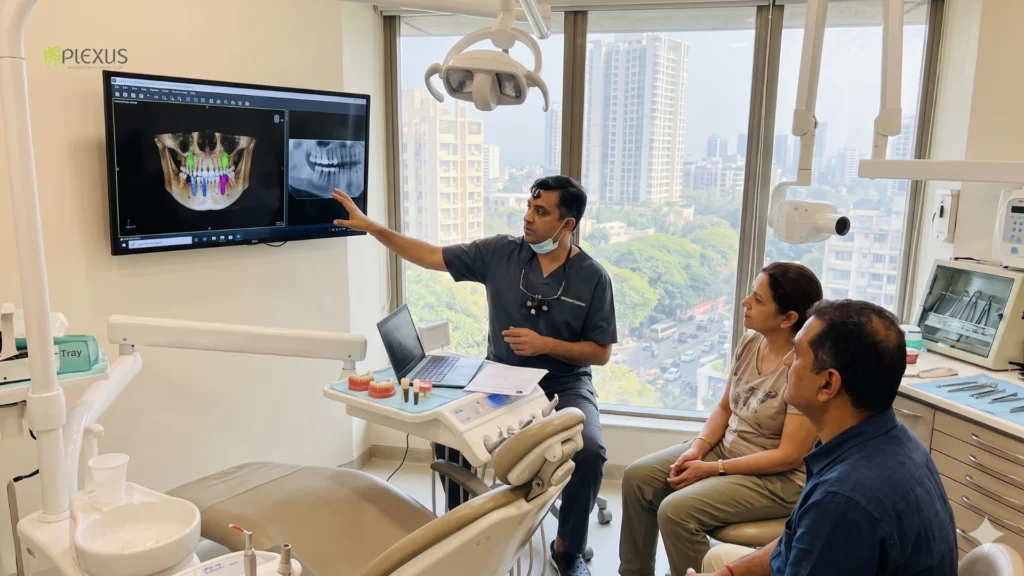
Before planning your travel and dental consultation in Mumbai, it is advisable that you share all your previous dental records, X-rays, medical history for any pre-existing condition, and recent medical reports if available.
Depending on your complaint and shared records, you might also be asked to perform some required X-rays or tests. Do note that even after sharing all the records, an in-person examination and consultation is still required.
Treatment Phases and Healing
Before you plan for your travel and dental consultation, it is important to know that a dental implant is a comprehensive treatment involving multiple phases and a long healing period that can take several months.
The European Federation of Periodontology describes a typical healing period of around 2 to 6 months.
Source: European Federation of Periodontology – Dental Implants Explained
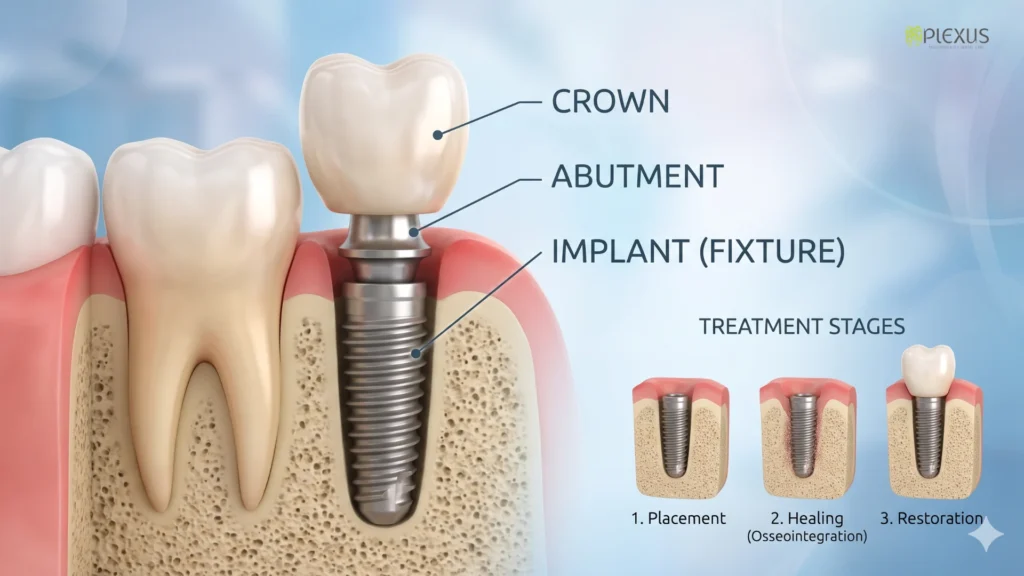
The various phases of implant placement include:
Consultation and diagnostic scans
Implant placement
Healing phase for about 3 to 6 months
Crown placement
It is important to note that any additional surgical procedures, if required, might change the treatment and healing time.
When booking your flight tickets, it is necessary that you clearly understand from your dentist regarding the treatment time, the procedures that would be performed, how much treatment is planned during your stay, and how many days would be required.
Planning dental treatment in Mumbai for international patients also involves understanding the treatment timeline, travel arrangements and follow-up care.”
How Many Trips Are Needed?
A minimum of 2 to 3 trips are usually required to successfully complete consultation, implant treatment and crown placement.
During your first consultation, an estimate of your entire treatment plan, number of implants required, healing period, need for additional surgeries, number of required follow-ups, type of crown material and total trips required will be discussed.
Accommodation, Flights and Contingency Time
Follow these guidelines for a smooth visit:
Avoid booking an immediate return flight post-surgery.
Allow time for postoperative follow-ups and unplanned care.
Discuss with your dentist regarding local dental maintenance and care for complications post-return to home.
Find your accommodation around your clinic to save time during traffic.
Accordingly, check for airline requirements, any medical clearance required from your doctor and travel insurance.
How to Compare Dental Implant Costs?
Being a comprehensive treatment, an implant procedure might involve various procedures like tooth extraction, bone grafting, sinus lift, fixture (implant) placement, temporary prosthesis and permanent crown.
All these procedures are charged separately depending on their need and case complexity.
A single advertised low-price quotation for an implant does not mean that the entire treatment would complete at a low price. This is because the prices can increase depending on the case.