A toothache is mild to severe pain in or around your teeth and jaws. A sudden toothache can be painful and disruptive, making it difficult to eat, sleep, or focus on daily tasks. It may indicate that you have a tooth or gum concern. Home remedies are not a cure for these conditions, but they can temporarily manage the symptoms until professional dental care is received.
The cause of pain could be tooth infection , cavity, impacted tooth , gum infection around the tooth ( especially wisdom teeth) sensitivity etc
Table of Contents
Book your dental consultation with Plexus Dental Studio today.
Home Remedies to Relieve Pain Before You See a Dentist
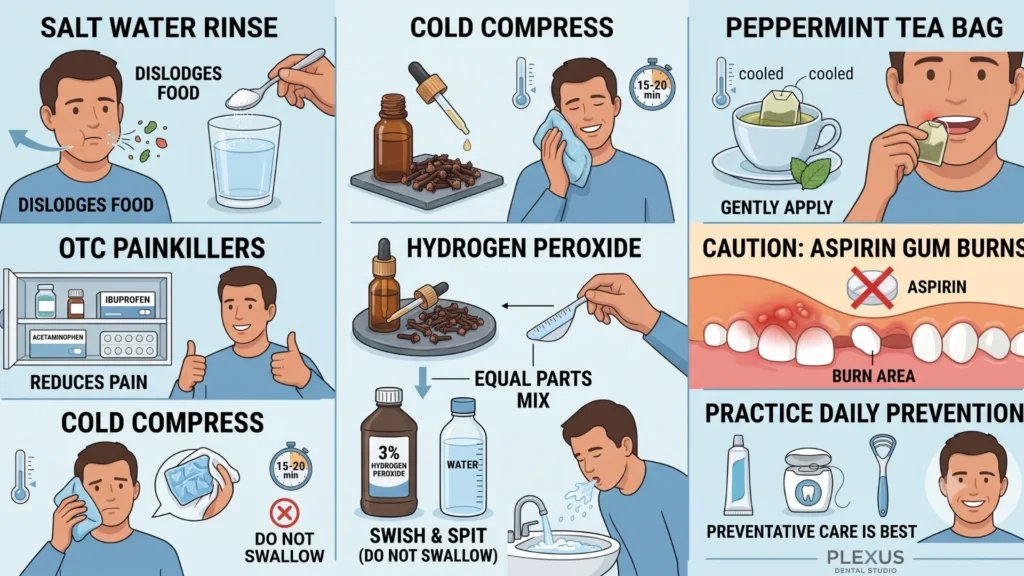
1. Saltwater Rinses
Salt is a natural disinfectant and can help reduce swelling or inflammation. Another reason is that saltwater rinses can help dislodge stuck food particles. Maintaining good dental hygiene can also help prevent oral problems.
How to do this?
- Mix half a teaspoon of salt in 1 glass of warm water.
- Swish it in your mouth for 30 seconds and spit.
- Repeat this a few times.
- Can be done 2–3 times a day.
2. Over-the-Counter Painkillers
Non-prescription painkillers like ibuprofen or acetaminophen can temporarily reduce toothache.
3. Cold Compress
How to do it?
Wrap an ice pack in a cloth and place it on the cheek near the painful tooth for 15–20 minutes to help reduce pain and swelling.
4. Clove Oil
Clove oil contains eugenol, a natural anesthetic and antiseptic compound.
How to use it?
Dab a small amount on a cotton ball and gently apply it to the painful tooth or gently chew on a clove to release its oil. This can help relieve the pain.
5. Hydrogen Peroxide Rinse
A hydrogen peroxide rinse can kill bacteria and relieve discomfort, especially in case of swelling.
How to use it:
- Mix equal parts of 3% hydrogen peroxide and water.
- Swish the mixture around in your mouth for 30 seconds, then spit it out. Do not swallow.
- But this should not be done too frequently or too long, as overuse may irritate the oral soft tissues.
6. Peppermint Tea Bag Compress
Peppermint is known for its mild numbing properties.
How to use it?
Apply a slightly cooled or slightly warm peppermint tea bag on the affected sore area for 5–10 minutes. For other ways to manage gum discomfort, see these home remedies for sore gums.
Remedies to Avoid
Not all home remedies are safe. Applying aspirin directly to the tooth or gums is a harmful practice that can burn oral tissues.
Home remedies involving excessive heat should also be avoided, especially if infection is suspected, as heat can cause the infection to spread faster.
If you are not sure about a particular remedy, it is best to consult your dentist before trying it.
When to See a Dentist
It is important to understand these remedies are not cures but can provide meaningful comfort until you can receive definitive dental care. Treatment may involve addressing cavities, repairing cracked teeth, managing gum disease, or treating infections. Treatment may involve addressing cavities, repairing cracked teeth, managing gum disease, or treating infections.
At Plexus Dental Studio, our dentists in Lokhandwala, Andheri West accurately diagnose the cause of your tooth pain and provide treatments to relieve pain.