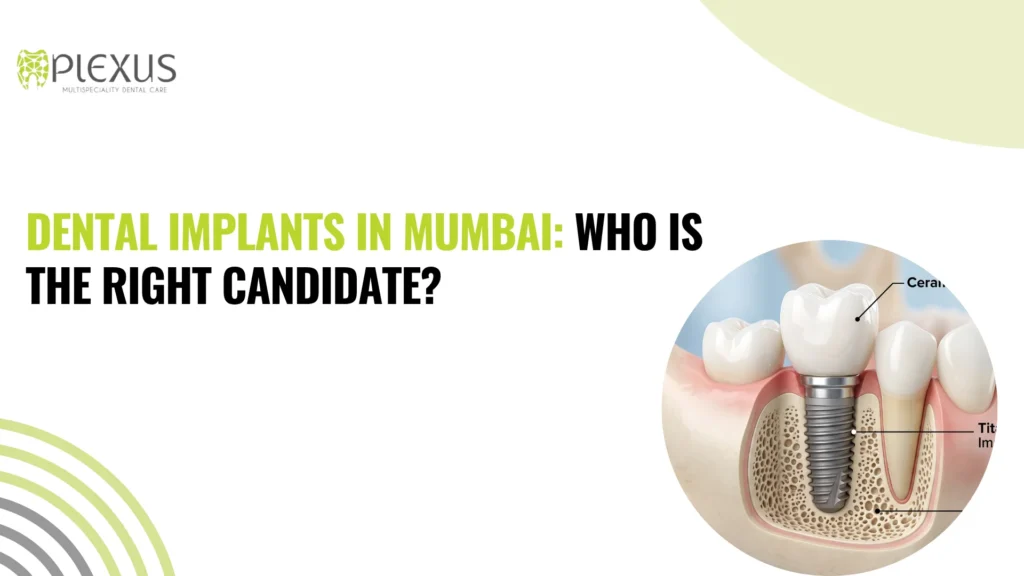
Now-a-days everyone knows about Dental implants. They are an excellent, long term replacement option for missing teeth. But did you know that even though implant placement is a very common procedure, not every case is fit for it.
Multiple factors like bone availability,medical conditions, gum health along with various other factors plays an important role in deciding whether an implant would be a suitable option or not. If you are considering dental implants in Mumbai, a thorough consultation at a dental clinic Andheri West can help determine whether an implant is suitable for you and whether any additional treatment is required.
Table of Contents
What Are Dental Implants?
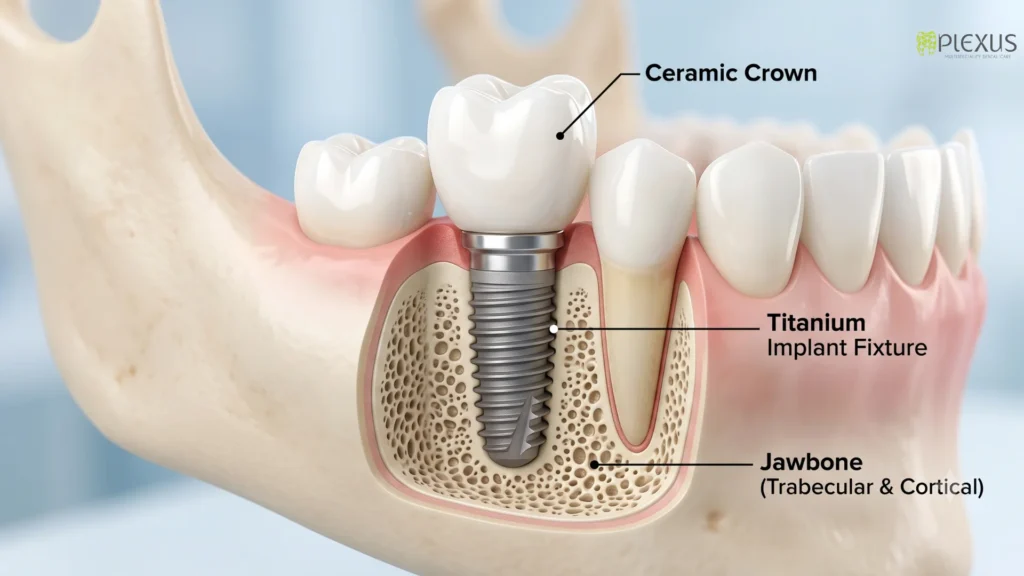
A dental implant is a metal post that is surgically placed into the jawbone to replace one or multiple missing teeth.A dental implant is an artificial root replacement of a tooth above which a crown,bridge or denture is fabricated.
A dental implant system consists of 3 components fixture/screwed metal post which is the implant itself, abutment and crown. The implant is surgically screwed into the jawbone and left for 3 to 4 months before placing a permanent crown.
This waiting period of a few months allows the surrounding jaw bone to bond with the implant (osteointegration) before loading it with a crown.
What Factors Determine Dental Implant Candidacy?
Here is a list of factors that are taken into consideration before placing an implant:
- Presence of one or more missing teeth
- Have good healthy gums
- Have good oral hygiene
- Have adequate jaw bone support to hold the implant
- Are medically healthy to undergo minor oral surgery
- Are willing to maintain regular dental follow-ups
- Are prepared to follow the post-operative and long term maintenance instructions
Why Is Gum Health Important for Dental Implants?
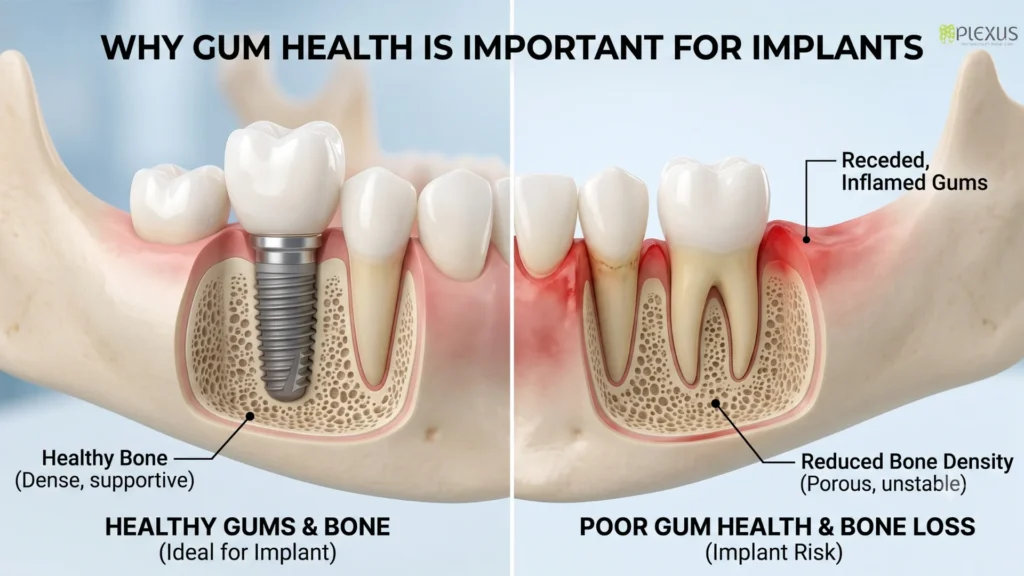
Gum and jawbone form the foundation for an implant. Gum health is a very important factor to be considered before placing implants since they:-
- Provide stability and longevity to the dental implant
- Allows proper healing and integration of the implant to the jaw bone
- Prevents gum associated infections around implants (also called peri-implantitis).Persistent long term infection can lead to implant failure.

How Gum Disease Can Affect Dental Implant Success?
What Is Peri-Implantitis?
Unhealthy gums lead to infection around implants also called peri-implantitis. This can lead to poor implant integration with the jaw bone or implant failure in future.
Bone Loss:
Just like in our normal teeth, unhealthy gums can eventually lead to bone loss causing tooth mobility and tooth loss. In the same way, poor gum health can lead to bone loss around implants and eventually cause implant failure.
Post Implant Healing:
Inflamed or infected gums can slow down the healing process and can therefore lead to implant rejection.
Systemic Health Issues:
Gum disease has been linked with overall health conditions like diabetes and cardiovascular disease which can eventually complicate implant failure.
Can You Get Dental Implants If You Have Gum Disease?
Professional Dental Cleanup:
Removal of the deposited tartar and plaque through dental cleanup significantly reduces the risk of implant failure. Professional cleanups and regular follow-up are necessary post implant placement also for long term success of implants.
Treating Existing Periodontal Disease:
Any periodontal or gum disease needs to be treated and stabilized before proceeding for dental implants.
Maintaining Healthy Lifestyle:
Avoid smoking, tobacco and alcohol for proper healing. Maintain a healthy diet to control Systemic factors like diabetes and cardiovascular conditions. Eating a balanced diet and choosing foods for healthy teeth can also support good oral health.
Why Is Jawbone Health Important for Dental Implants?
A healthy jaw bone forms the foundation for the dent implant. Having sufficient good quality jaw bone is important for:
Support and stability:
A healthy jawbone stabilizes and supports the dental implant thus providing long term longevity.
How Does Osseointegration Work?
A dental implant forms the root analog for a tooth which is surgically placed into the jawbone. Once placed the jawbone integrates with the implant thus stabilizing. A healthy jawbone facilitates proper osseointegration thus ensuring long-term success of the implants.
Various diagnostic tests like dental x-rays and CBCT helps in determining the quantity and quality of the jawbone. Even in cases of insufficient or poor quality jawbone,various treatment options are available that can facilitate implant placement and its integration with the jaw bone. These include:
Bone Grafting for Dental Implants:
In case of insufficient jaw bone, additional bone material can be placed in the area of defect. This allows for good implant integration and long term stability.
Ridge Expansion for Dental Implant Placement:
A sinus lift is done for upper jaw implants where the sinus lining of the maxillary sinus is lift and additional bone graft is placed. In Ridge expansion , the jaw bone is splitted and additional bone material is added to create a wider bone base.
Can Diabetic Patients Get Dental Implants?
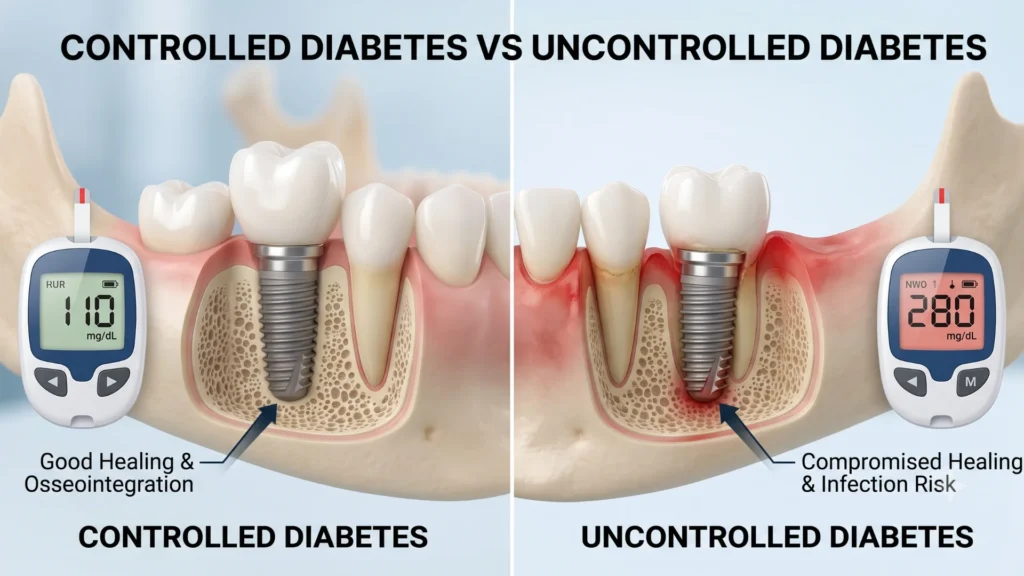
A patient with well controlled diabetes can definitely be considered for dental implants. The dentist would ask for a detailed medical history that might include:
- Blood sugar fasting and post prandial
- Hba1c
- Healing history
- Overall oral health including gums and jawbone.
- Other diabetes related medical conditions
For patients with uncontrolled diabetes, it can interfere with implant healing and can also lead to post surgical infections. This can eventually lead to implant failure. In such patients with uncontrolled diabetes, elective implant surgery may need to be postponed until the condition is better controlled.
Can Smokers Get Dental Implants?
Smoking interferes with post implant healing and is also associated with peri-implant disease. Smoking directly affects gum health which can cause infection and inflammation around the implant. Smoking can increase the risk of implant failure. Therefore your dentist might recommend you to reduce or stop smoking before and during the healing phase of implant surgery.
Is There an Age Limit for Dental Implants?
There is no age limit to who can get an implant. For any age, the factors that are important include:
- Presence of any medical condition
- Overall oral health including gum and jawbone
- Healing capacity
- Ability to maintain the implant for long term
How Is Dental Implant Candidacy Assessed?
1. Clinical Examination
The dentist evaluates:-
- Adjacent teeth
- Gums
- Bite
- Available space for crown
- Bone and soft tissue
2. Xrays and CBCT
These diagnostic tests helps to assess:
- Bone height and weight
- Location of nerves
- Bone quality
- Sinus position
- Adjacent tooth roots
- Ideal implant position
3. Medical History
The dentist will review relevant medical history and conditions, various lifestyle habits and previous dental history.
4. Treatment Planning
After reviewing all the reports, tests, intraoral conditions and Systemic factors an in-depth treatment plan will be made which would include implant surgery along with any other surgery or procedure required to stabilize and increase the longevity of the implant. If you are considering dental implants in Andheri West, a detailed consultation and assessment can help determine the most suitable treatment approach.
How Should You Maintain Dental Implants After Treatment?
Even after successfully placing an implant, it still requires regular maintenance . The patient still needs to:
- Brush twice a day
- Clean properly around the implant area
- Use proper interdental cleaning aid
- Have regular dental follow-ups and professional clean-ups. For example, understanding how Mumbai water can affect your teeth can help you make informed decisions about your daily oral-care routine.