
More people get colds, flu and other seasonal illnesses throughout the winter months, but the effects can be more than just a cough, fever or sore throat. The flu season can also affect your oral health, leading to symptoms including mouth sores, dry mouth, a sore throat and even more tooth pain.
Fever, dehydration, congested sinuses, mouth breathing and some cold and flu drugs might significantly affect your oral health. Even little things like drinking less water or skipping brushing when you are sick are everyday behaviors that can increase your risk for dental disease.
We at Plexus Dental Studio know that your oral health is as important while you’re sick as when you’re well. Knowing how to deal with these dental problems and why they occur will help you maintain healthy teeth and gums during the winter months.
Here’s how winter flu can damage your mouth, the signs to watch out for and the basic dental care routines that can help keep your smile healthy.
Table of Contents
How And Why Is Winter Flu Connected To These Oral Problems?

Mouth Ulcers And Sore Throat
Lowered immune system due to viral infection can cause the lining of your mouth and throat to become inflamed, which causes soreness.
Even minor irritations in the mouth from fever, dehydration, neglecting oral care or even just biting your cheek while feeling unwell can turn into full ulcers or canker sores.
Usually appear on the the roof of the near the throat, or tongue.
They are round lesions that have red edges and are yellow, white, or gray in the middle.
Most mouth ulcers resolve on their own in 7-14 days as the flu passes and your immune system recovers. You can also explore these home remedies for oral ulcers to learn how to manage oral discomfort.
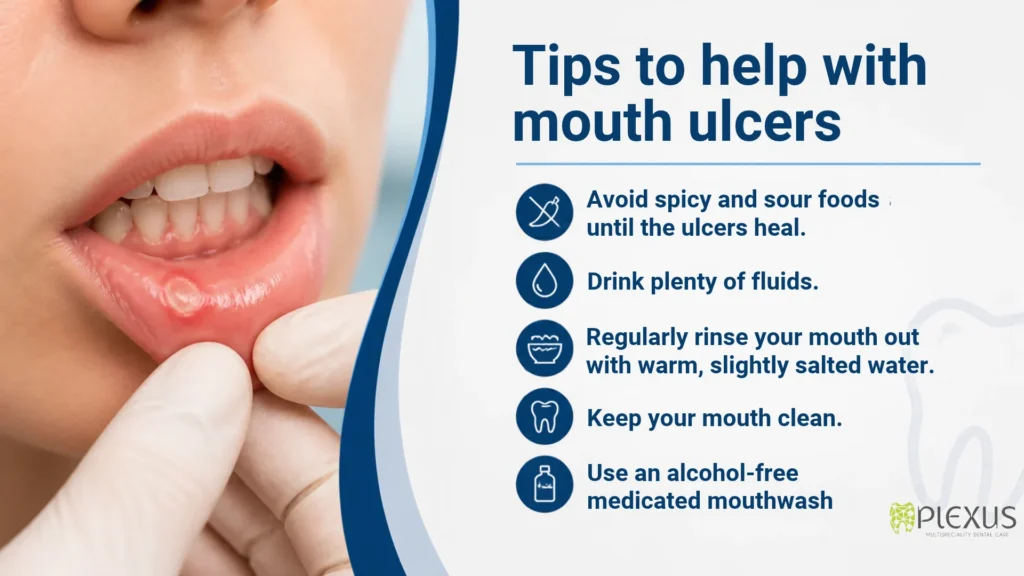
Tips To Help With Mouth Ulcers
Avoid spicy and sour foods until the ulcers heal.
Drink plenty of fluids.
Regularly rinse your mouth out with warm, slightly salted water.
Keep your mouth clean.
Use an alcohol-free medicated mouthwash.
Topical anaesthetics – numbing gel will provide temporary pain relief.
Regular professional cleaning also helps maintain oral hygiene. Learn more about teeth cleaning costs in Andheri West
Dry Air And Dry Mouth
Winter air is naturally dry because of less moisture in air.
Dry mouth condition is also known as xerostomia.
Along with dry air congestion from a cold or flu, blocked sinus can lead to mouth breathing which further worsens the condition.
Your mouth feels oddly sticky, you’re thirsty all the time, and sometimes you even have a sore throat. A dry mouth isn’t just uncomfortable; it’s also a problem for your oral health.
Dry mouths are low in saliva, which is your body’s natural defence against tooth decay and gum disease. Saliva’s job is to wash away food particles, neutralize acids, minimize plaque buildup, and combat bacterial overgrowth in the mouth. When there isn’t enough saliva in your mouth, you’re more susceptible to cavities, gingivitis, and bad breath (halitosis).
Tooth Pain
If you have ever noticed tooth pain along with a stuffy nose, you are not alone. This occurs because some of your upper teeth roots are located just below the sinus cavity. When your sinuses become inflamed or congested, they put extra pressire on the underlying tooth roots, resulting in discomfort. This is referred pain from maxillary sinus congestion. This pain is often dull and continuous. This pain should subside as you recover from illness. However, if the pain continues you need to visit your dentist.
Drinking Less Water
We feel less thirsty in winter, so many people drink less. Low fluid intake makes saliva thicker and your mouth drier, which encourages bacterial growth, gum irritation and a sore throat.
Neglecting Oral Care When You’re Ill
When you’re resting in bed, brushing might not be a top priority, but it’s still important. Bacteria thrive when we skip brushing, increasing the risk of gum inflammation and bad breath. Following these dental hygiene tips can help you maintain good oral hygiene, even when you are unwell.
Hot Drinks
Sipping tea or soup that is too hot can burn the lining of the mouth and the throat. The burn can turn into a painful sore or traumatic ulcer. Let hot drinks cool for a minute or two before you sip them.
Cold And Flu Remedies That Affect Or Worsen Oral Health
Cough Drops And Lozenges
Most Lozenges that we suck on throughout the day are essentially candy coated with medication. Most contain high amounts of sugar and are designed to dissolve slowly in your mouth, bathing your teeth in sugar for extended periods.
Prolonged sugar exposure and frequent consumption van increase risk of cavities.
Some lozenges also contain citric acid or other acidic components that erode enamel.
Certain cold medicines including some decongestants and histamines can contribute to dry mouth. It also contains sugar that feeds the decay causing bacteria especially if you are taking them at night.
Tips for a Healthy Mouth This Winter Flu Season
Stay hydrated to combat dry mouth and maintain a healthy saliva flow.
Choose sugar-free cough drops and cold medicines when possible to protect your tooth enamel.
Keep up with regular brushing and flossing, even when you are not feeling your best.
If you are looking for a trusted dentist in Andheri West, our team is here to help you with your dental care needs.