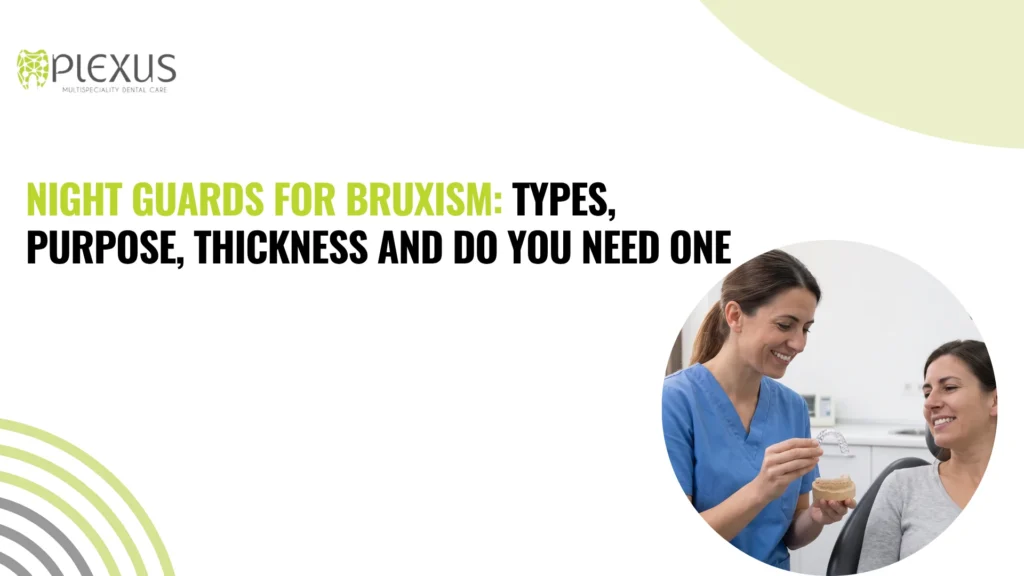
Do you often wake up with dull headaches on the temple, jaw soreness or stiffness of the facial muscles? These are the signs that you might be clenching or grinding your teeth at night. This clenching and grinding can have a deteriorating effect on the teeth, jaw muscles and TMJ. A nightguard can help you reduce these ill-effects of clenching. This blog will help you understand about night guards, its various types, its purpose and also help you decide if you need one. If you’re experiencing jaw pain, morning headaches, or signs of teeth grinding, consult the best dentists in Andheri West for a comprehensive evaluation and a personalized treatment plan.
Table of Contents
What Is Bruxism?
Bruxism is the involuntary grinding and clenching of teeth. Bruxism can be classified as Awake and Sleep bruxism. Awake bruxism is the subconscious clenching and grinding of teeth during waking hours.Sleep bruxism happens during sleep and the patient often wakes up with headaches and facial muscle tenderness.
Waking up with jaw pain or headaches? A custom night guard could help protect your smile.
Harmful Effects Of Bruxism
1) Tooth Wear and Enamel Loss
Continuous repeated grinding leads to wearing out of the outer protective enamel layer of the tooth. The tooth may start to appear shorter and flatter because of the wear and tear. These are the initial or visible signs of chronic bruxism.Enamel abrasion will eventually lead to inner dentine exposure and cause discomfort,sensitivity and in some cases can lead to severe pain.
2)Tooth Sensitivity
Severe enamel loss leads to dentin exposure and in worst cases dental pulp also gets exposed. Because of this, teeth become more sensitive to air or foodstuffs that are hot, cold or sweet, or acidic foods and beverages. If you’re experiencing these symptoms, it’s worth understanding the common causes of tooth sensitivity and when professional treatment may be needed. Patients may experience sensitivity while having hot tea, coffee, soup or cold icecream, water etc. This sensitivity causes discomfort in your daily routine dietary habits. Tooth sensitivity is a sign that often appears before any clinical or visible signs of tooth fracture or cracks due to grinding.
3)Tooth Chips, Cracks or Fractures
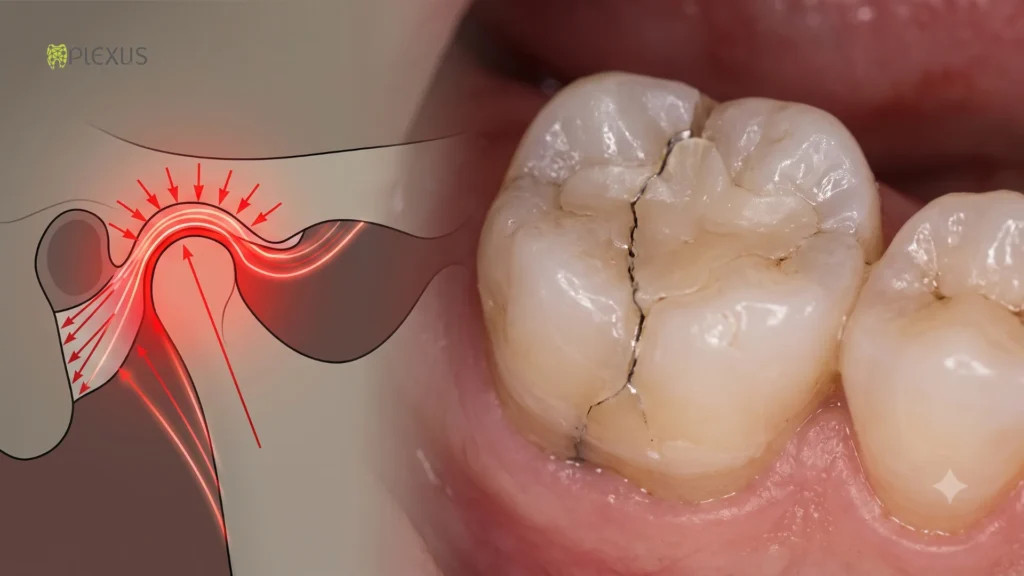
Because of the constant forces from grinding and clenching the teeth may create microcracks. These microcracks can overtime enlarge and lead to tooth chips or fractures. Tooth restorations like composites filling Amalgam and tooth prosthesis like crowns, bridges etc can also chip and fracture under such constant forces of clenching. This leads to a constant cycle of dental treatment and repair.
4) Muscle Fatigue and Jaw Pain
Constant clenching leads to jaw muscle soreness and tightness. Patients often complain of feeling pain on chewing, mouth opening and even after long periods of talking. Patients having sleep bruxism often complain of waking up with morning jaw stiffness. Patients may also complain of heavy or tense feeling in the jaw.
5) Headaches
Muscle strain due to clenching may cause discomfort on the temples, forehead or sides of the head. Bruxism can lead to headaches especially in the morning.
6)TMJ Discomfort
The temporomandibular joint can be strained due to repetitive clenching and grinding. TMJ problems like clicking, popping, stiffness and difficulty in achieving full mouth opening. Existing TMJ problems might also worsen due to bruxism.
7) Damage To The Existing Dental Work
Long standing clenching and grinding creates unusually high occlusal forces and thus can lead to fracture, chipping or crack of existing tooth fillings and crowns. Implants can also fail due to such high forces. Repeated breakage leads to treatment failure and eventually leads to more corrective treatment cost and increased chairside time.
8) Sleep Disturbances
Patients with bruxism are usually unaware of their grinding or clenching habits but still experience poor quality of sleep. Poor sleep quality leads to irritability, fatigue and reduced concentration during the day time. Usually bed partners of the patient often hear the grinding sounds even when the patient is unaware of the sound.
How Can A Night Guard Help?
A night guard worn on either of the arches acts as a buffer between them.It prevents the direct wear and tear of the enamel and thus prevents its loss. A nightguard also reduces the strain and tension created on the jaw muscles and TMJ thus reducing jaw pain and muscle tightness. Nightguard acts as a cushion and distributes the direct pressure that occurs on dental restorations, prosthesis and implants. This pressure distribution prevents their failure and increases treatment longevity. Do note that nightguard does not treat bruxism but prevents damage and increases comfort. While a night guard protects your teeth from grinding-related damage, maintaining good oral hygiene and following a tooth-friendly diet can further support long-term dental health and help protect weakened enamel.
Types Of Night Guards
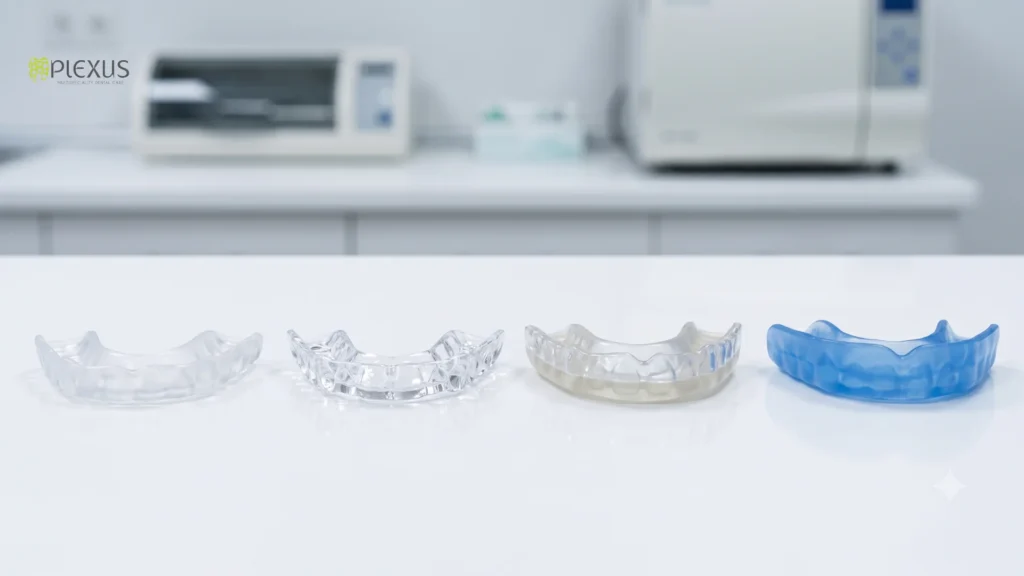
Nightguards can be classified majorly into 4 categories. They are soft,hard, hybrid and over-the-counter.
Soft Nightguard:
As the name suggests,these guards are soft and therefore comfortable to wear. These are advised for patients with mild bruxism and first-time users. Since they are soft,they are easier to adapt to but may wear out faster.
Hard Acrylic Nightguard:-
These are firmer than the soft type and therefore difficult to adapt to initially. These are advised for patients with heavy grinding or clenching. Because of its hardness, they provide stronger protection and do not wear out too quickly.
Hybrid Guards:-
These have a soft inner layer and an outer hard layer for comfort and durability. The inner soft layer helps provide comfort to the teeth and gums. The outer hard layer provides stronger protection and is highly durable.
Over-the-Counter Nightguards:-
These are boil-and-bite or one-size-fits-all generic guards which are available at the pharmacists. These are cheaper but provide less comfort and are bulkier than the custom made guards.
Does The Thickness Of The Nightguard Matter?
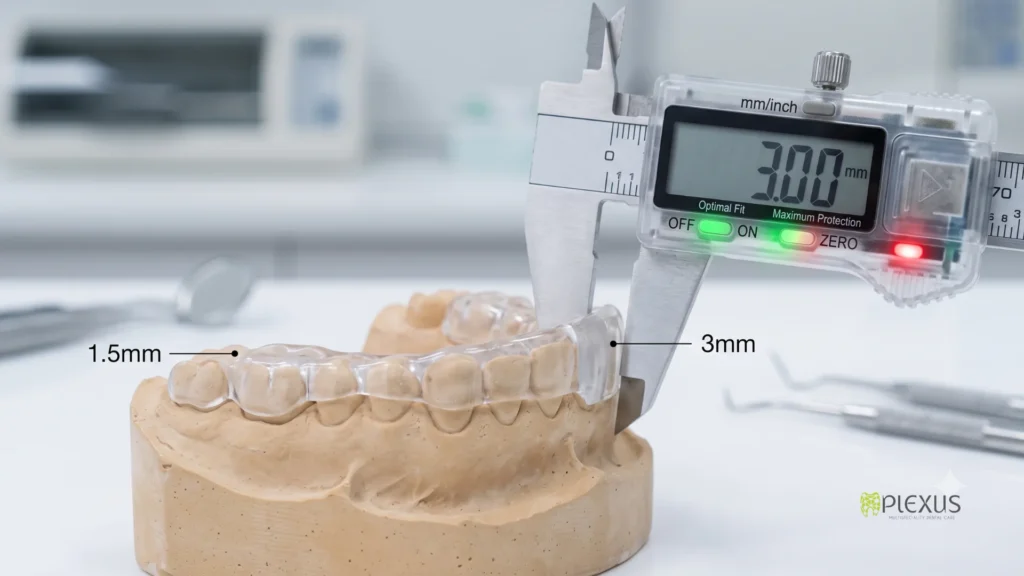
The thickness of the nightguard affects its comfort,durability and protection. A nightguard should be thick enough to resist high forces but not too bulky that it’s difficult to wear. Usually a nightguard falls in the 1 to 3mm range of thickness, with most of the professionally made guards falling in the category of 1.5 to 2.5mm. For patients having mild bruxism a thinner guard is enough. In case of heavy or severe bruxism, a thick nightguard can provide better protection and durability. Therefore the thickness of the nightguard depends on the severity of bruxism and the comfort of the patient.
Do You Need One?
If you experience visible toothwear,jaw soreness,cracked fillings or tooth prosthesis, morning headaches or nighttime grinding then you need to have your condition evaluated by a dentist. A dentist will evaluate your bite, enamel wear and symptoms before recommending a nightguard. Please note that many people grind their teeth subconsciously but the diagnosis for bruxism needs to be made by a dentist.
What Patients Should Except?
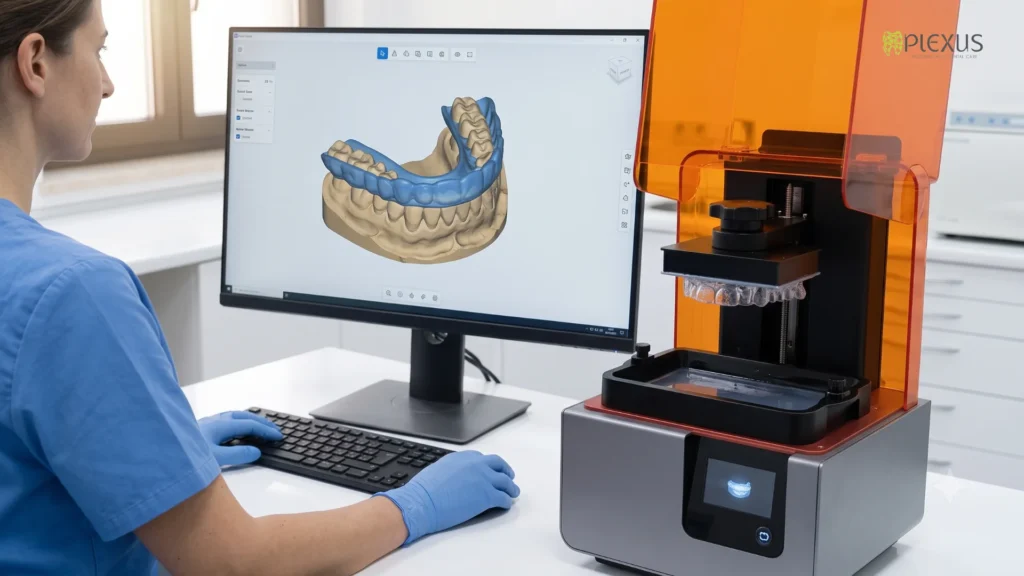
Once a diagnosis is made after the necessary examinations an impression or a digital scan is done for the fabrication of the nightguard. Once the nightguard is fabricated it is checked for a snug fit in the patient’s mouth. It can take some time to adapt to the nightguard. A nightguard can initially cause increased salivation and speech slurring which usually settles in 1 to 2 weeks. Proper cleaning of the night guard is essential to maintain its hygiene. The nightguard is to be removed every time the patient eats or drinks.
Think you might have bruxism? Schedule a dental evaluation to protect your teeth before the damage worsens.
FAQs
What is the cost of full-mouth rehabilitation in Mumbai?
The type of treatment, implant-supported or crown-supported, determines the cost. The most economical and durable plan for your needs can be found with the aid of a thorough evaluation at Plexus Dental Studio.
Is full-mouth rehabilitation painful?
Absolutely not. The procedure is minimally invasive and comfortable thanks to local anesthesia and sophisticated digital dentistry.
How long does the treatment take?
It can take anywhere from a few weeks to several months, depending on the complexity of the case, guaranteeing ideal healing and outcomes.