
Table of Contents
What Is Tooth Sensitivity and Why Does It Happen?
Tooth sensitivity is a sudden, sharp pain in your teeth which can occur due to certain triggers- this pain is usually short, sudden, sharp, and goes away within a few seconds. It can be on one or multiple teeth and it’s usually difficult to identify which tooth the sensation is arising from.
How Tooth Sensitivity Develops?
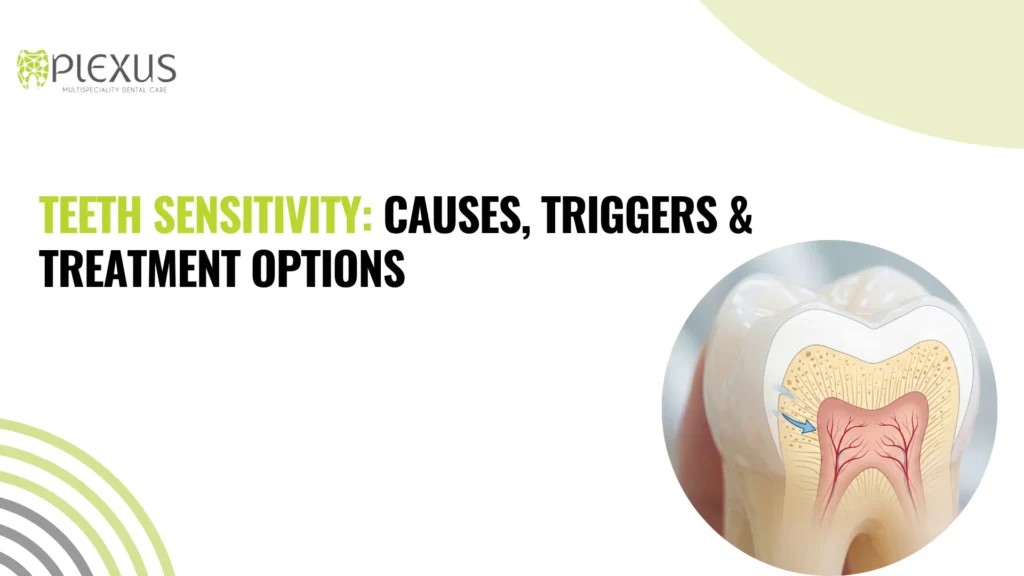
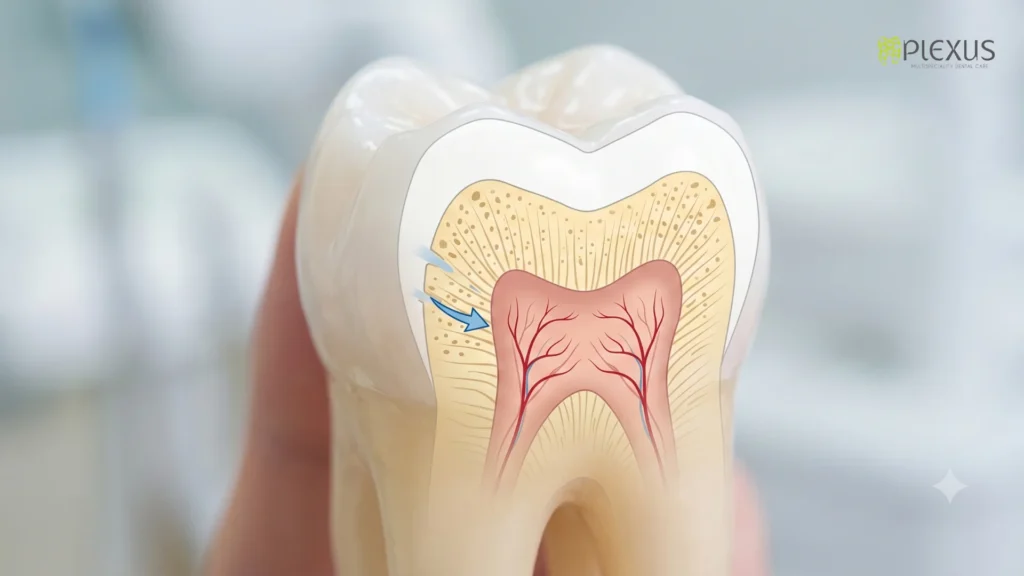
Your tooth is made up of 3 layers:
1. Outer hard shell- Enamel
2. Middle porus layer – Dentin
3. Inner soft filling- Pulp ( has the nerve of the tooth)
Enamel Erosion and Tooth Wear
The enamel is the hardest substance of your body. The middle layer of your tooth- the Dentine- is yellowish in colour and has many tubules/ channels which are filled with natural fluids.
These fluids can get disrupted and flow towards the pulp when certain triggers touch the dentine directly without the protection of the enamel. When this fluid gets disrupted, it directly translates to your tooth nerve which is perceived as pain or sensitivity of your teeth.
What Are the Most Common Causes of Sensitive Teeth?
The most common reason for tooth sensitivity is : enamel loss or thin enamel which doesn’t provide the necessary protection your teeth need against sensitivity.
Factors That Cause Enamel Loss
Loss of sufficient enamel or wearing away/ thinning of enamel can occur due to number of reasons:
1. Aggressive brushing can wear our your enamel
2. Grinding your teeth against each other ( apart from chewing)
3. Excessive acidity – this can be due to gut issues or drinking too many acidic drinks
4. Receding gums can lead to enamel thinning and cause sensitivity. If gum recession is accompanied by bleeding while brushing, it may be worth exploring treatment options for bleeding gums treatment
Apart from Enamel loss, here are a few other reasons why you may feel sensitivity:
1. Teeth cavities
2. Swimming
3. Sinusitis
Maintaining adequate levels of essential vitamins for teeth can also help support overall tooth health and enamel strength.
Tooth Sensitivity to Cold Foods and Drinks
Sensitivity to cold drinks or foods is the most common issue people feel wrt their teeth. This is also commonly popularized by many ads on TV. The reason for this is simply wearing away or loss of enamel. The exposed tooth becomes sensitive to cold stuff.
To identify whether you really have any of the above issues with your teeth, it’s always advisable to schedule a dental appointment and do a thorough check professional. We never recommend that people use any type of anti-sensitivity paste without actually first understanding the reason behind the sensitivity. These types of pastes should only be used on a prescription basis.
Along with avoiding trigger foods, including the best foods for healthy teeth in your diet can help support stronger enamel and better oral health over time.

Teeth Sensitivity to Hot Foods and Beverages
Yes, if you are experiencing sensitivity to hot foods or drinks, its important to schedule a dental visit at the earliest. The most common reason for hot sensitivity is nerve damage. If you have a large cavity which needs attention- you are most likely to experience sensitivity to hot and cold stuff. Untreated decay can also progress and lead to tooth infection . This is a preemptor to actual tooth pain, and ignoring these signs from your body can lead to further damage.
Why Have My Teeth Suddenly Become Sensitive?
If you have suddenly started experiencing Teeth sensitivity, it’s a good time to identify any recent changes you may have made to your diet or lifestyle. If you have been having dental issues for a while, the tooth sensitivity could be a sign that you need dental treatment.
Certain lifestyle changes like swimming, going to colder temperatures, grinding or clenching your teeth can also lead to sudden sensitivity.
Another reason for sudden sensitivity could be a crack in your tooth or a broken tooth due to decay.
These reasons are best identified by your doctor and if you are developing any sudden sensitivity, it’s advisable to schedule your dental check up before starting any OTC toothpastes for sensitivity.
Experiencing sharp pain when eating, drinking, or brushing? Consult Now!
Can Swimming Cause Tooth Sensitivity?
Yes, swimming regularly can cause teeth to become sensitive. When these pools use chlorine in their water as disinfectant, this chlorine gets in repeated contact with your teeth for swimmers who breathe with their mouth. This chlorine affects the enamel by making it porous and therefore causes tooth sensitivity!
How to deal with sensitivity while swimming?
If you have mild sensitivity while swimming, we recommend applying an anti-sensitivity paste on your teeth before you go into the pool. This helps to soothe the teeth, and reduce the sensitivity.
If you have severe sensitivity, then it’s recommended to wear a mouth guard while swimming to protect your teeth against the chlorine.
Can Teeth Whitening Make My Teeth Sensitive?
Teeth whitening can sometimes cause sensitivity. This happens because of prolonged exposure to whitening gels which dehydrate the enamel and make the teeth sensitive. However, this sensitivity is only temporary and resolves once the enamel hydrates over a period of 24-48 hours.
If you experience teeth sensitivity after whitening, simply use an anti-sensitivity paste which uses potassium nitrate or similar substituents to manage the sensitivity. This paste can be applied on the teeth and left for a few minutes. This type of sensitivity usually subsides within 1-2 days and is no cause for concern.
What Foods and Drinks Can Trigger Tooth Sensitivity?
Certain citric foods, or drinks, cold beverages or ice creams can trigger a thermal change in the tooth dentine and cause the teeth to become sensitive. This sensitivity is usually very short lived and goes away in a few seconds. If you have lingering sensitivity when eating any such foods, then it’s recommended to visit your dentist and understand the root cause of this sensitivity.
Foods/ Beverages that can cause tooth sensitivity:
1. Orange, Pineapple, mango, lemons
2. Cold drinks or sodas
3. Ice creams
Can Stress and Teeth Grinding Cause Sensitivity?
(Bruxism, enamel wear, microfractures, jaw clenching.)
Stress and teeth grinding usually go hand in hand. People who live a stressful lifestyle usually have a habit of grinding or clenching their teeth sub consciously. This type of teeth grinding is not healthy and can lead to wearing away of the top enamel layer. Patients who habitually grind their teeth end up having dentine exposure and wearing away of teeth leading to generalized, long term sensitivity which can be detrimental.
There are various ways to manage this type of grinding:
1. Start by creating a routine to help manage the stress – yoga, breathing exercises or other necessary lifestyle changes.
2. Start by wearing a night guard which can help protect the teeth during non-functional grinding of teeth during the day / night.
3. Find a way to rehabilitate the worn out teeth to prevent further damage to your natural teeth.
What Is the Best Treatment for Sensitive Teeth?
To understand the best treatment for teeth sensitivity, it’s important to first visit your dentist and identify the cause of sensitivity. Once your dentist identifies the root problem, you can work on treating the issues. If sensitivity is caused by nerve involvement or a deep cavity, a root canal treatment may be recommended to save the tooth.
This could include treatments like:
1. Treating Cavities with Filling
2. Capping your teeth to help with worn our teeth
3. Cleaning your gums and keeping a good hygiene routine. In cases of advanced gum problems, gum disease treatment in Andheri West may be recommended.
4. Wearing a night guard to protect your teeth.
Using an anti-senitivity toothpaste should only be a symptomatic treatment and used for a limited time. It cannot be regarded as a long term solution to sensitivity.
When Tooth Sensitivity Requires Professional Care
(Red flags: persistent pain, pain while chewing, localized sensitivity, swelling, lingering pain.)
If you have mild/ moderate sensitivity and you use an anti-sensitivity paste for a limited duration of time, it can help resolve the sudden sensitivity. However, if this sensitivity persists over 1 week, does not resolve with any OTC Paste, or if you have pain in your teeth accompanied by sensitivity to hot and cold foods, then it’s important to schedule a visit to your dentist to understand the reason.
How Can I Prevent Tooth Sensitivity in the Future?
(Prevention tips and daily habits.)
To prevent sensitivity, follow the simple tips given below:
1. Brushing twice daily with a gentle toothpaste. ( not an anti-sensitivity toothpaste)
2. Flossing – 3 times a week – to prevent any cavities between teeth
3. Getting regular cleanings done with the dentist – every 6 months- to catch any issues with your teeth at an initial stage.
4. Avoid brushing your teeth very vigorously with a hard brush as this causes the enamel to wear away further.
5. Avoid using any aggressive tooth paste – whitening or charcoal or ayurvedic toothpastes- these can contain more abrasive substances which can cause further teeth wear.
6. Avoid grinding your teeth or protect your teeth with a night guard if you do end up grinding at night.

Pingback: Night Guards for Teeth Grinding: Types & Benefits