
You’re mid-conversation, everything feels normal, and then the other person suddenly leans back or takes a step back. Or they offer you gum out of nowhere. It’s awkward, and you start wondering if your breath is the reason.
The frustrating part? You brush every day, maybe even use mouthwash, yet something still feels off. That’s where bad breath treatment gets misunderstood. It’s not just about covering the smell. Most of the time, there’s a real cause behind it, like bacteria on your tongue, gum issues, or even something going on in your body.
You’re not alone in this either; the American Dental Association notes that roughly half of all adults have dealt with bad breath at some point in their lives, and it’s consistently ranked as one of the top reasons people seek dental care, right after cavities and gum disease. Once you understand what is really causing it, it is much easier to cure.
In this blog, we’ll take a deeper look at what bad breath actually is, why it happens and what you can do to finally take care of it the right way.
Table of Contents
What Is Bad Breath (Halitosis)?
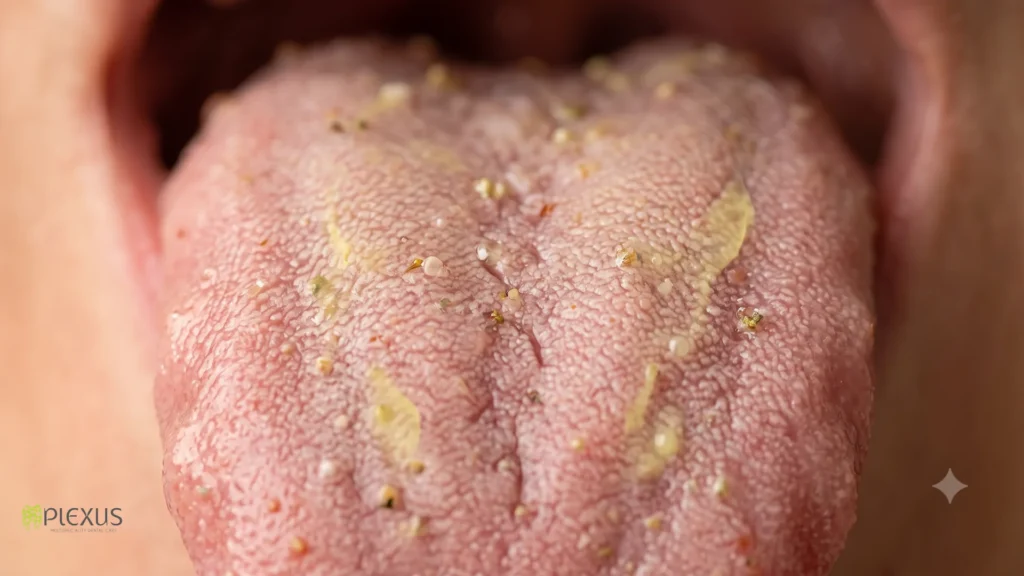
Halitosis is basically a medical word for chronic bad breath. Usually this is caused by bacteria in your mouth. These bacterias eat the leftover food particles, dead cells and proteins. When they break things down inside the mouth, they emit gases called volatile sulfur compounds (VSCs) and those cause the smell.
The tongue also has a key role to play here. It has a surface of microscopic grooves that collect germs, food particles, and dead cells. In addition, plaque build-up, gum problems, cavities and dry mouth can all cause the bacteria to multiply.
In the vast majority of cases (about 80-90%) the problem lies in the mouth itself. However, in rare cases foul breath might be a symptom of various health problems in the body.
Temporary vs Chronic Bad Breath
Not all bad breath means you need to worry about it.
Temporary bad breath is very normal. It happens after eating foods like garlic or onions, drinking coffee or alcohol, waking up in the morning, or even just going a long time without eating.
Chronic bad breath is different. It sticks around even after brushing, flossing, or using mouthwash. You might notice it coming back within a few hours or not going away at all. When that happens regularly, it’s usually a sign that something else is going on with your body and that needs your attention.
That’s why real bad breath treatment isn’t about hiding the smell, it’s about getting rid of what’s causing it in the first place.
Struggling with persistent bad breath? Book your gum disease treatment consultation now.
Why Does My Breath Smell Bad? The Real Causes
If you want the right bad breath treatment, you first need to understand what’s causing it.
Oral Causes
1. Poor Oral Hygiene
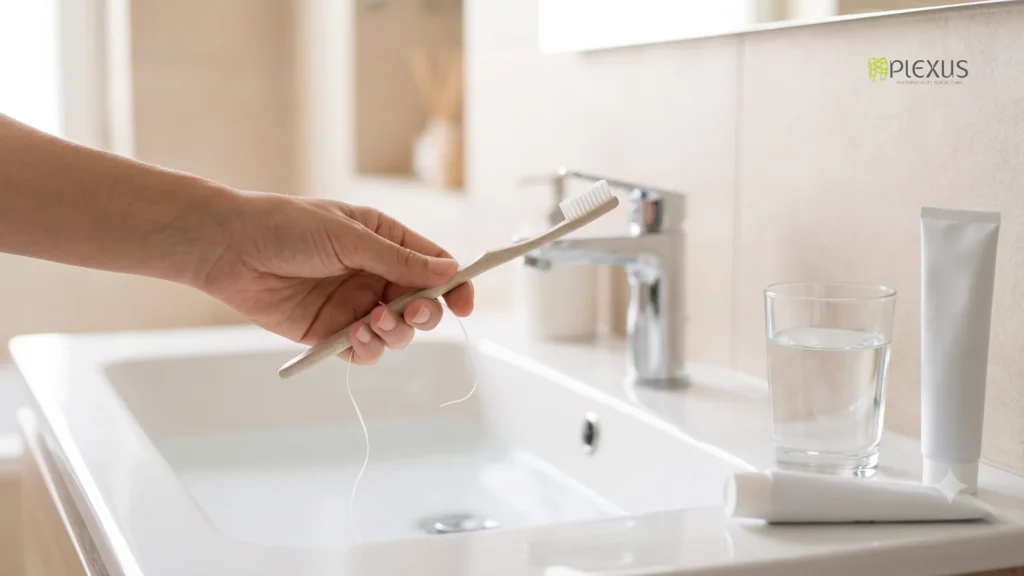
When you don’t brush or floss properly, food gets stuck between your teeth and along your gums. Bacteria feed on it and release those unpleasant-smelling gases. That’s why oral hygiene for bad breath is very important. Following practical dental hygiene tips every day can help reduce plaque buildup, control odor-causing bacteria, and keep your breath fresher for longer.
Expert Insight: Patients often bring us mouthwash as their first and only fix, but mouthwash without tongue and gumline cleaning is treating a symptom, not the cause. In most of the chronic cases we see, the real issue is gum inflammation that hasn’t been addressed yet.
2. Tongue Bacteria
A lot of people forget to clean their tongue. But your tongue actually holds a lot of bacteria because of its textured surface. If you don’t clean it, that buildup can become a major source of bad breath. Simply brushing the tongue has been shown in ADA-cited studies to cut bad-breath measurements by as much as 70%, making it one of the highest-impact, lowest-effort fixes available.
3. Plaque Buildup
Plaque forms on your teeth every day. If it’s not removed, it hardens into tartar, which can only be cleaned by a dentist.
4. Gum Disease
Healthy gums fit firmly around your teeth. When plaque builds up, it can irritate the gums and produce gingivitis. If it becomes worse, it can turn into periodontitis. Learn more about the signs, causes, and treatment options for gum disease treatment if you’re experiencing persistent bleeding gums, swelling, or ongoing bad breath.
5. Tooth Decay and Dental Infections
Cavities are holes in your teeth where food and bacteria become trapped. This can in turn lead to bad breath and possibly other health issues in the future.
6. Dry Mouth
Saliva helps keep your mouth clean. When there isn’t enough of it, bacteria can grow more easily.
Dry mouth can happen because of dehydration, medications, smoking, diabetes, or even just sleeping with your mouth open. That’s why morning breath is so common.
7. Ill-Fitting Dental Appliances
Dentures, braces, and retainers can trap food if they’re not cleaned properly. That trapped debris becomes a breeding ground for bacteria. Keeping these clean is just as important as brushing your teeth.
Lifestyle Causes of Bad Breath
Some everyday habits can make bad breath worse, even if your teeth are healthy.
- Smoking can lead to gum disease, dry mouth, and foul-smelling chemicals.
- Alcohol dries out your mouth and helps bacteria to flourish.
- When you digest garlic and onions, their molecules enter your bloodstream and move up in your lungs. This is why they change your breath.
- Coffee can stink and dry your mouth.
- Low-carb diets strong in protein might produce bad breath.
- And not hydrating enough? It reduces saliva and makes things worse.
Systemic (Medical) Causes
Sometimes, bad breath isn’t coming from your mouth at all.
- Conditions like diabetes can cause a fruity smell on the breath. Sinus infections can lead to mucus buildup that bacteria feed on.
- Tonsil stones are another typical cause. These are small, foul-smelling deposits that grow in the tonsils.
- Acid reflux can cause the stomach contents to back up, resulting in a sour smell.
- Breath can also be affected by major illnesses such as kidney or liver disease.
- Some drugs can contribute as well, particularly those that dry out your mouth.
Home Remedies vs. Professional Bad Breath Treatment
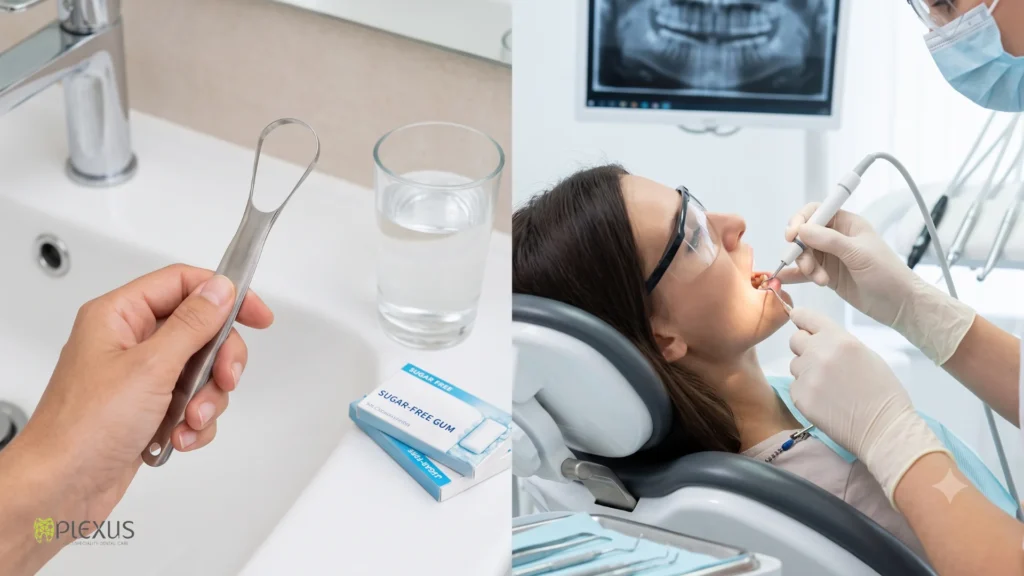
Most people try quick fixes first, and that’s totally normal. Things like chewing gum or rinsing your mouth can help for a bit. But they don’t always solve the real problem.
Home Remedies | Professional Treatment |
Tongue scraping | Professional dental cleaning |
Drinking more water | Gum disease treatment |
Sugar-free chewing gum | Cavity and infection treatment |
Warm salt-water rinse to keep the mouth clean and soothe irritated gums. | Dry mouth management based on the underlying cause |
Better daily brushing and flossing. | Diagnosis of underlying oral or medical conditions. |
Drinking green tea, which may help reduce odor-causing bacteria. | Antibacterial mouth rinses (if your dentist prescribes them). |
Chewing parsley or fennel seeds for temporary breath freshening. | Referral to a medical specialist if a health condition is causing the bad breath. |
If your gums are swollen, tender, or bleeding along with persistent bad breath, these sore gums home remedies may provide temporary relief until you can visit your dentist.
How to Cure Bad Breath Permanently?
There’s no magic trick here. It really comes down to simple habits done consistently.
1. Brush Properly Twice a Day
Take your time (at least two minutes), and make sure you’re reaching all areas of your teeth.
2. Clean Your Tongue Daily
A lot of people skip this, but your tongue holds a ton of bacteria. Using a tongue scraper or even your toothbrush can help a lot.
3. Floss Every Day
If you don’t floss, that trapped food starts to break down, and that causes halitosis. f you’re unsure whether you’re flossing correctly, this guide on how to use a dental floss can help you clean between your teeth more effectively.
4. Stay Hydrated
Dry mouth is a big cause of bad breath. Drinking enough water helps keep saliva flowing, and saliva naturally helps clean your mouth.
5. Quit Smoking
Smoking doesn’t just smell bad, but it also dries out your mouth and increases your risk of gum disease. Quitting can make a noticeable difference in your breath (and your overall health).
6. Reduce Sugary Foods
Bacteria love sugar. The more sugar you eat, the more they grow, and the more odor they produce.
7. Visit Your Dentist Regularly
Even if everything feels good, regular checkups still matter. Dentists can catch problems early and clean areas you can’t reach at home.

Foods That Help Reduce Bad Breath
What you eat can actually affect your breath more than you might think.
Food | How It Helps |
Apples | Help clean your teeth as you chew |
Yogurt | May support good bacteria in your mouth |
Citrus fruits | Increase saliva production |
Leafy greens | Support overall oral health |
Crunchy vegetables | Help scrub away food particles |
Water-rich fruits | Keep your mouth hydrated |
Probiotic for bad breath | According to a randomized controlled study published by NIH/NCBI, Weissella cibaria, a strain of probiotics, improved halitosis parameters and reduced periodontal infections. Thus, it disrupted the balance of bacteria that creates the odor. |
Foods That Can Worsen Bad Breath
Some foods are just known for causing stronger smells.
- Garlic and onions.
- Coffee.
- Alcohol.
- Sugary foods.
Common Myths About Bad Breath
There’s a lot of misinformation out there, so let’s clear a few things up.
Myth 1: Bad breath is removed by mouthwash
Reality: Mouthwash is not the answer. Most only temporarily cover bad breath. Some can even worsen the problem by causing dry mouth.
Myth 2: Bad Breath is Caused by an Upset Stomach
Reality: Bad breath is typically, and almost exclusively, mouth-originated.
Myth 3: I Just Have to Brush
Reality: Cleaning the mouth is a complex task. You must also floss and clean your tongue, and mouthwash is also optional.
Myth 4: Gum Solves the Problem
Reality: The breath situation is only temporarily improved by the chewing, sugar-free variety preferred by many, but nothing is fixed. This only addresses the bad breath situation and provides a brief window of relief.
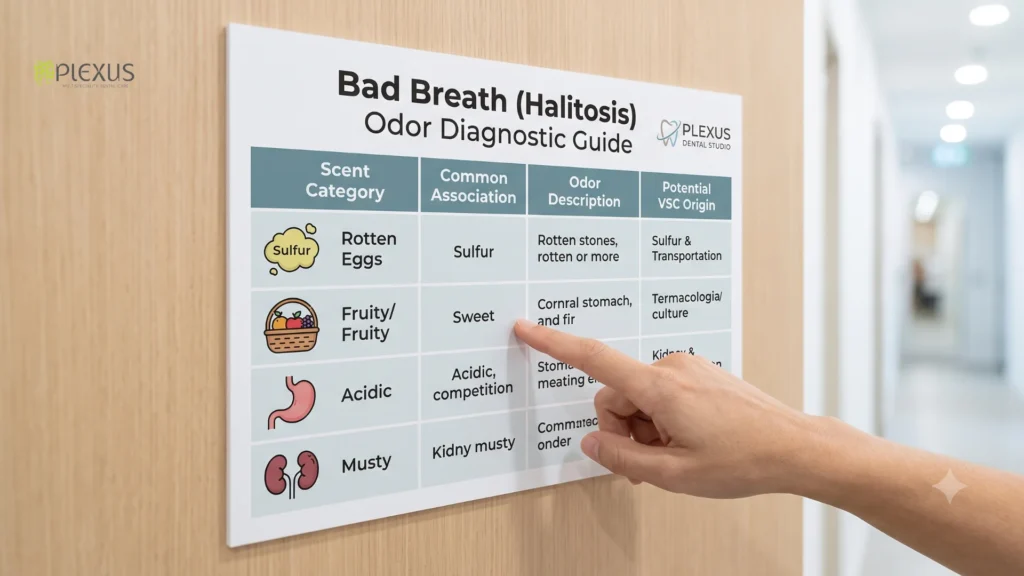
Plexus Dental Studio's Bad Breath Treatment Diagnostic Chart
The scent itself is a diagnostic clue for bad breath treatment. Dentists and doctors use the character of the odor as a first-pass diagnostic tool before they run any tests. Here is a simplified version of that rationale, taken from the clinical literature on volatile sulfur compounds (VSCs):
What the breath smells like | Likely source | What it typically points to |
Rotten eggs/sulfur | Hydrogen sulfide from tongue & gum bacteria | The most common cause is tongue coating, gum disease, or trapped food debris. |
Sweet, fruity, or nail-polish-like | Ketones (acetone) | Very low-carb dieting, prolonged fasting, or, if persistent and unexplained, uncontrolled blood sugar; worth a physician check if you’re not dieting. |
Sour or acidic | Stomach acid reaching the throat | Acid reflux / GERD. |
Musty or ammonia-like | Nitrogen waste products | In rare, persistent cases, linked to kidney function and worth a medical opinion. |
Persistent “old food” smell from one side of the mouth. | Localized bacterial pocket | Often a tonsil stone or a single problem tooth rather than general oral hygiene. |
Why this matters for you: research has also identified a real condition called halitophobia, where a person is convinced they have bad breath even when objective testing shows none, as documented in a clinical review published by the NIH. This cuts both ways: some people worry over nothing, while others have real, measurable halitosis they’ve been masking with gum for years without addressing the cause. Objective testing is the only way to know which situation you’re actually in, and it’s a service most people don’t realize their dentist can offer.
Please note: This is not a self-diagnosis tool. It’s a way to describe your symptom more precisely when you do see a dentist, which speeds up diagnosis. Source: Underlying VSC research: NIH / PMC
When Should You See a Dentist for Bad Breath Treatment?
Bad breath in the morning or after certain foods is normal. But if it sticks around, that’s different.
If you’ve been brushing, flossing and cleaning your tongue regularly and the stench persists after a couple of weeks, it’s a good idea to consult a dentist.
Also, do not ignore indicators like bleeding gums, loose teeth, dry mouth, soreness or sores that do not heal; These could indicate anything more serious.
If your dentist finds nothing in your mouth, they may recommend screening for other health problems.
If you’re unsure where to start, visiting the best dentist in Andheri West can help you identify the cause of persistent bad breath and receive the right treatment. Dr. Esha Parikh at Plexus Dental Studio focuses on understanding what’s actually causing the issue, not just masking it, and helps guide you toward the right treatment in a simple, practical way.
Expert Insight: If bad breath has lasted more than two to three weeks despite proper brushing, flossing, and tongue cleaning, it’s worth a dental check-up rather than trying another product. We’d rather rule out a cavity or gum pocket early than have a patient mask it for months.
Tips to Prevent Bad Breath
Preventing bad breath really comes down to consistency.
- Brush your teeth twice a day and don’t rush it. Clean your tongue too.
- Floss daily, even if it feels like a hassle. Make sure you drink enough water during the day so that your mouth is not dry.
- Don’t smoke and don’t over eat sugary foods and drinks.
- And most importantly, keep up with your dental checkups.
Bad Breath Treatment: Final Thoughts from Plexus Dental Studio
Bad breath happens to everyone sometimes. It’s nothing to be ashamed of. But if it keeps coming back, it’s usually a sign that something needs attention. Instead of covering it up, you need to figure out what’s actually causing it.
Good daily habits go a long way, but they don’t fix everything. That’s where proper bad breath remedy comes in. If you’re unsure what’s going on, getting it checked from a dentist can make things easy for you. The team at Plexus Dental Studio can help you understand the cause and guide you on what to do next.
Book your dental appointment now and take your first step towards good breath and better oral health!
Disclaimer: This article is provided for general educational and informational purposes only. It is not intended to be, and should not be taken as, dental or medical advice, diagnosis, or treatment, and it does not create a dentist-patient or doctor-patient relationship between you and Plexus Dental Studio or any of its clinicians.



Pingback: Wisdom Tooth Pain and Symptoms: Causes & Treatment