
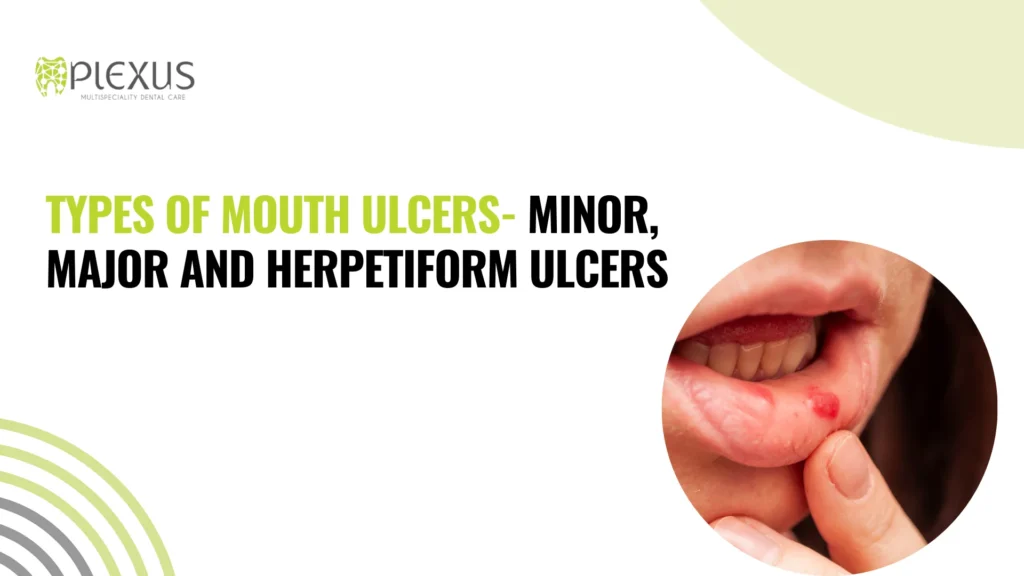
Mouth ulcers also known as canker sores are painful sores that can disrupt normal functions like chewing, swallowing and at times talking due to pain. In this blog we are going to elaborate the various types of mouth ulcers along with its symptoms, causes, treatment and prevention methods ideal for urban dwellers like those in Mumbai.
Table of Contents
Understanding Types of Mouth Ulcers: Causes, Symptoms & Treatment Options in Andheri West
The three main types of mouth ulcers include minor, major, and herpetiform ulcers. Each type differs in size, number, healing time, and severity.
Mouth ulcers are painful sores that form in the non-keratinized tissue of the inner cheek,lips, tongue or gums. They typically appear as round or oval lesions with yellowish center and reddish peripheral rings. The size and number of ulcers can vary based on the type of ulcer. Recurrent Aphthous Ulcers (RAS) affect about 20-40% of people. Recurrent Aphthous Ulcers can be classified as Minor, Major and Herpetiform based on its size,number and impact. Nutritional deficiencies also play a role in recurrent ulcers, especially when there is a lack of essential nutrients discussed under vitamins for teeth and oral health
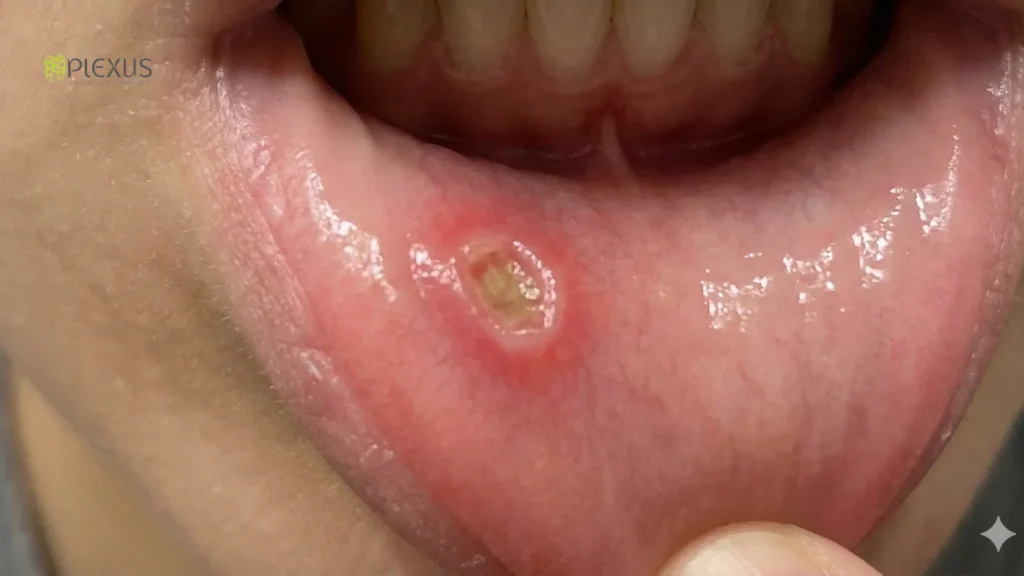
Minor Aphthous Ulcers: Symptoms, Causes & Treatment
This is the most common type affecting about 80% of RAS patients. These usually recur at an interval of 1-4 months. They are usually small in size (<5mm) and can develop in a group of 1 to 6 ulcers at a time. Healing usually occurs within 2 weeks without scarring. Oral discomfort may be experienced because of pain from ulceration.
Symptoms:
A prodromal tinge precedes shallow sores with mild to moderate pain.This pain usually worsens on eating spicy or acidic food.
Causes:
- Trauma (cheek bite,lip bite)
- Vitamin deficiency like B12,folic acid,iron etc
- Hormonal imbalance
- Stress related to work,exams etc
Treatment:
Treatment is usually aimed for symptomatic relief
- Anaesthesic ointments containing benzocaine or lignocaine
- Antimicrobial rinses containing chlorhexidine
- Home remedies like salt water gargle, honey or ghee though many commonly followed practices are often misunderstood, as highlighted in dental care myths vs facts
- Vitamin supplements
Major Aphthous Ulcers: Severe Mouth Ulcers & When to See a Dentist in Andheri West
Prevention strategies
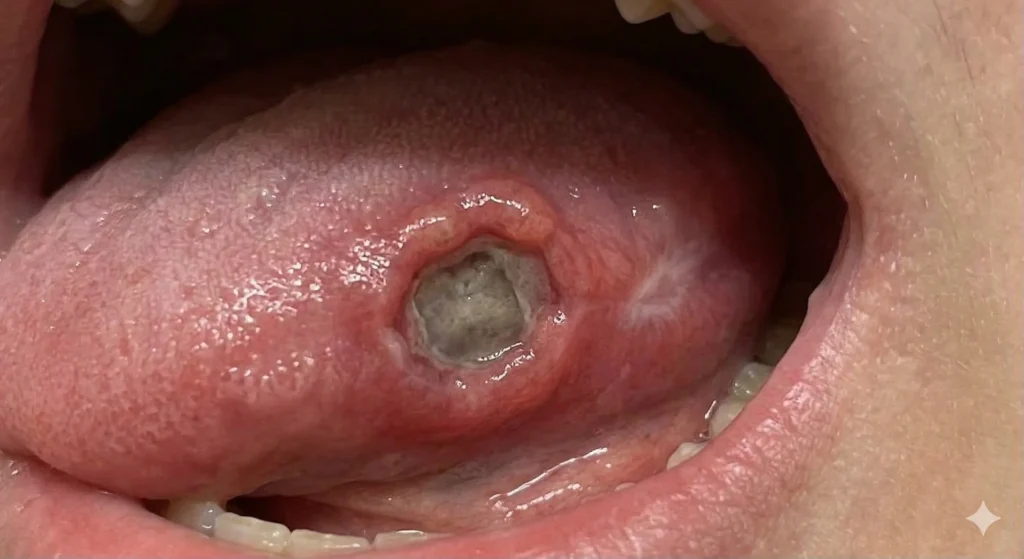
Major aphthous ulcers are a more severe form and seen in 10% of RAS patients.The ulcers are larger in size (>10mm) and last for about 5 to 10 weeks. Healing occurs with scarring.It is the most common type of RAS that occurs in AIDS patients. There is also an increased link between these lesions and gastrointestinal and hematological disorders.
Symptoms:
Major aphthous ulcers are seen as deep craters with severe pain which may also be associated with fever.
Causes:
Major aphthous ulcers are usually associated to some underlying disease or genetic predilection.Diseases associated include IBD (Crohn’s), celiac, Behcet’, HIV
Treatment:
- Topical steroids like triamcinolone, oral colchicine or dapsone
- Symptomatic relief with analgesics like ibuprofen or topical anesthetic gels containing benzocaine or lignocaine
- In case of persistent ulcers a biopsy would be recommended
Herpetiform Ulcers: Causes, Symptoms & Advanced Treatment Options
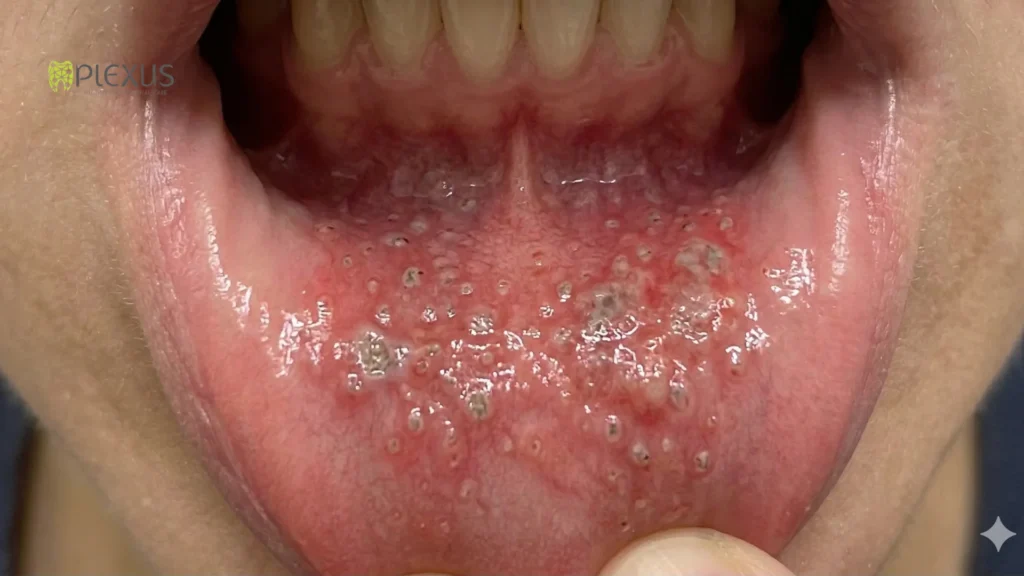
These are the least common type seen in only 1% to 10% of RAS patients. The name derived from its appearance being similar to herpetic stomatitis (it has no connection to the herpes virus). Herpetiform Ulcers have a predisposition for older females and are non-contagious.
Symptoms:
Intense burning and mimics herpetic stomatitis but is not contagious.
Causes:
- Idiopathic
- Drugs
- Autoimmunity
- Predilection for females
Treatment:
- Topical anesthetic ointments- lignocaine,benzocaine
- Systemic steroids
- Antimicrobial mouthwash
Difference Between Types of Mouth Ulcers: Minor, Major & Herpetiform

Understanding the differences between the various types of mouth ulcers helps in identifying the condition early and choosing the appropriate treatment approach.
Feature | Minor | Major | Herpetiform |
Size | <10mm | >10mm | 1-3mm |
Number | 1-5 | 1-10 | 10-100(+) |
Duration | 7-14 days | 2-6 weeks | 1-3 weeks |
Scarring | No | Yes | Rare |
Pain | Mild-moderate | Severe | Severe |
Common Causes of Mouth Ulcers in Urban Populations Like Andheri West, Mumbai
- Stress- exam,work,hectic fast paced urban lifestyle
- Nutritional deficiencies-B12 deficiency,iron deficiency
- Underlying disease-HIV,Crohn’s disease
- Local irritants- constant cheek bite due to wisdom tooth, sharp tooth restoration or decayed tooth having sharp edges
How to Prevent Mouth Ulcers: Diet, Lifestyle & Oral Care Tips
- Dietary changes: Including a diet that is rich in vitamin B12, iron.
- Lifestyle changes: Reducing stress by meditation and yoga
- Removing/reducing local irritants
Identifying the different types of mouth ulcers and their underlying causes is essential for proper management and prevention of recurrence.
Book an Appointment With Our Dental Team in Andheri West For a Personalized Treatment Plan.
FAQs About Mouth Ulcers
Are all ulcers from vitamin deficiency?
Vitamin deficiency is very seen in case of minor and major aphthous ulcers. Herpetiform ulcers are mainly immune-related.
Can pregnancy trigger ulcers?
Yes, hormonal imbalance and vitamin deficiencies during pregnancy can lead to minor aphthous ulcers.
Why do major aphthous ulcers scar?
Major aphthous ulcers cause deeper tissue damage that takes longer ger time to heal along with aggressive care.This results in scarring after the ulcers are healed.

Pingback: Home Remedies for Mouth Ulcers: Dentist-Approved Relief Tips