If you are someone who is planning to undergo a dental extractions, here are a few things you need to know before your procedure. When you are undergoing an extraction, it’s common to be apprehensive and have many questions about the treatment and the pain afterwards.
This blog is going to do a deep dive into your healing and signs to look out for after your dental extractions. A few things we will cover are: What should I expect after my extraction? What if there is pain after my dental extraction? What if I get a dry socket ?
Table of Contents
How Does a Healthy Tooth Extraction Socket Heal After Extraction in Andheri West?
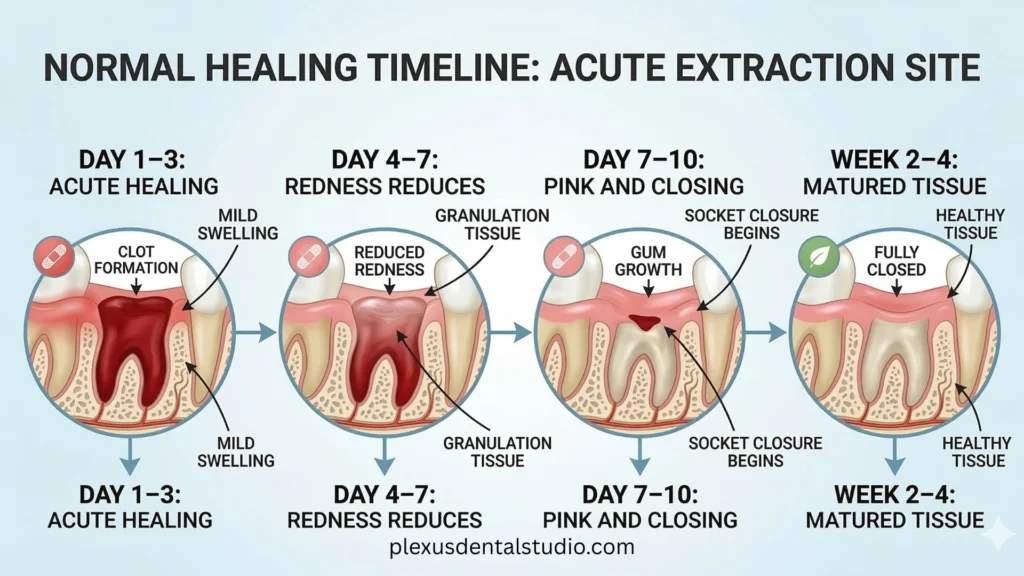
Let’s start by understanding what is normal. When your tooth has been taken out, it is very common that there will be a small wound-like area, which may or may not have stitches. The gums will be slightly red or swollen. A healthy tooth extraction socket undergoes the following changes in a 7-10 day span:
Day 1-3: Slight redness, swelling, pain/ discomfort ++.
Day 4-7: Redness is gone,Gums may have a slightly whitish appearance, only slight swelling, Pain/ Discomfort + ( very mild)
Day7-10: Gums appear healthy and pink, no swelling of the gums, Pain/ Discomfort is zero – minimal.
The area of the gums may have a hole/ opening but the entire gums close up after a period of 2-4 weeks. As long as the gums are looking pink and healthy, your wound is healing well. Proper follow-ups after tooth extraction help ensure the socket is healing normally. If you notice unusual pain or delayed healing, consult the best dentists in Andheri West for a professional evaluation and guidance.
Severe pain after extraction? Don’t ignore, book your appointment today
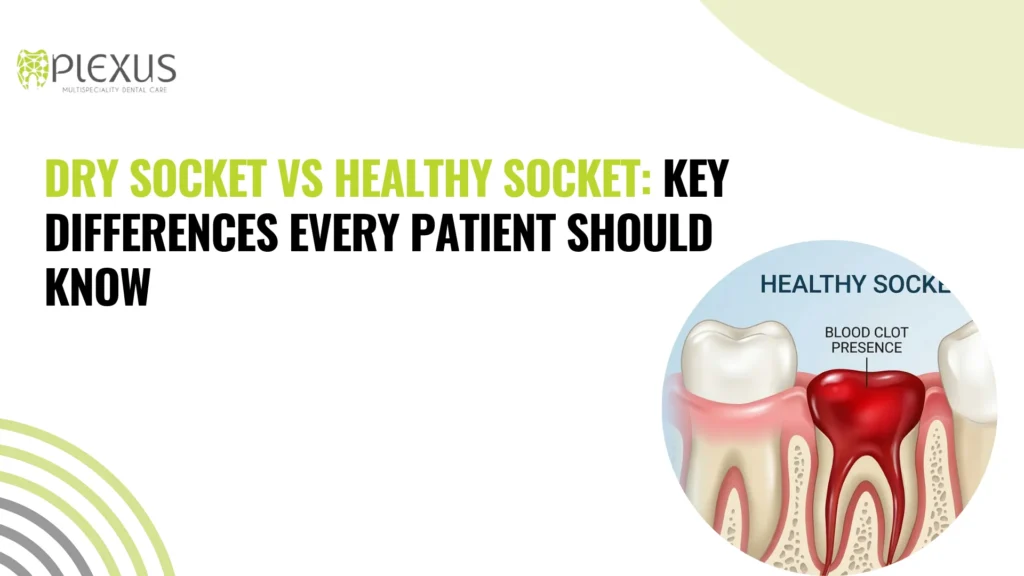
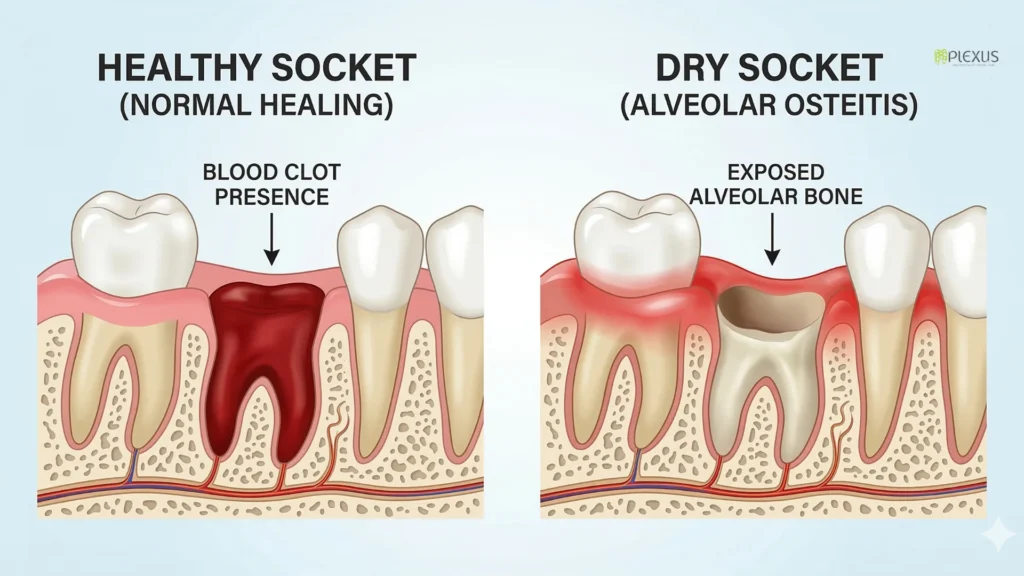
Healthy Socket vs Dry Socket: Visual Comparison
| Healthy Socket | Dry Socket |
|---|---|
| Pink or light red gums | Dark or empty socket |
| Blood clot present | Blood clot missing |
| Mild discomfort reducing daily | Severe throbbing pain |
| Healing improves every day | Pain worsens after 2–4 days |
| No bad smell | Bad breath or unpleasant taste |
| Normal healing tissue | Visible exposed bone |
| Swelling gradually reduces | Swelling may increase |
What Exactly Is a Dry Socket and Why Does It Happen?
A Dry socket is a painful wound, after a dental extraction which does not show normal signs of healing and can be a cause for concern for patients. A dry socket may look swollen, red/ inflamed even after the first 2 days, and is extremely painful and uncomfortable.
There could be multiple reasons why a dry socket develops:
1. Loss of blood clot from the wound area.
2. Not keeping proper hygiene of the socket where the tooth was removed.
3. Lack of taking proper prescriptions after tooth removal.
4. Repeated spitting after surgery
5. Smoking or other habits like eating supari/ pan masala
There could be multiple reasons why a dry socket gets formed. One of the most common reasons is dislodgement of the clot from the socket area. When we remove a tooth, the area of the socket is hollow, but soon gets filled up with a blood clot. This is a part of the natural healing process. This Clot is very important to ensure healing. If this clot is lost due to any reason, it can cause dry socket. Dry socket is more commonly seen after wisdom tooth removal, especially when the extraction is more complex or involves impacted teeth. Learn more about the cost and procedure of wisdom tooth removal in Andheri West.
What Causes The Blood Clot To Come Out After Tooth Extraction?
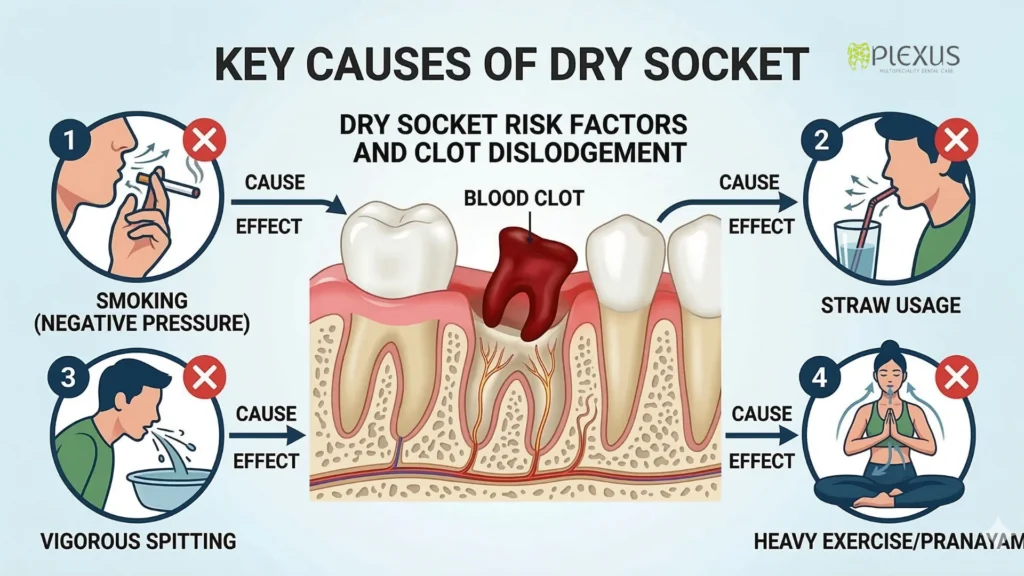
The most common reason for the blood clot to come out after extraction is : recurrent spitting out -esp. Of blood after extraction. We always advise patients not to spit after the extraction as the clot has a higher chance of getting dislodged due to spitting.
A few other reasons could be:
- Negative pressure created due to sipping with a straw, heavy breathing exercises (pranayam in yoga), heavy sneezing, coughing, smoking etc. all these are high risk reasons why the clot could get dislodged from the socket.
- At PDS, we always advise our patients to follow all the instructions given by our experts very thoroughly. This ensures a smooth healing of the wound and our patients are very comfortable after their procedures.
- 95% of our patients always report back to us with a positive healing and comfortable experience as we do a regular follow up with them after surgery too.
Signs of Dry Socket vs Healthy Healing in Andheri West
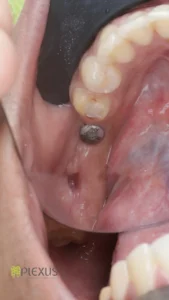
The most commonly noted sign of dry socket is pain and a wound which is not healing well. Most patients after tooth removal are comfortable from the very next day – and can go about their daily routines with ongoing painkiller medicines.
With patients who develop dry socket, the signs become visible usually on the 3/4th day post extraction.
These can be:
1. Painful wound/ socket area
2. Pain which does not subside even due to painkiller medication.
3. Visible swelling ( in the mouth or outside)
4. Whitish appearance of the socket ( which could be the underlying bone)
When to See a Dentist for Dry Socket in Andheri West, Mumbai?
If you have undergone a dental extraction in the past 3-5 days, and your pain is simply not going away, it’s important to evaluate the cause for it. At times, there could be pain only in the socket gums area- which is due to lack of hygiene. However, if there is throbbing/ continuous pain in the area of the extraction, which does not subside with medications, it’s important to get this checked out by your dentist at the earliest.
We regularly schedule follow ups after dental extractions to make sure our patients are having a positive healing experience. While a dry socket might be a painful condition, rest assured that it is treatable. You need to visit your dentist and make them aware about the situation, so they can take the necessary steps.
Does Dry Socket Need Dental Treatment in Andheri West?
A dry socket requires intervention from a dentist- it will require recurrent cleaning with medication and sometimes also involves placing a dressing in the area of the extraction socket to prevent any further infection. Your dentist might also modify your pain prescription to help you cope with the dry socket. While a dry socket may heal by itself eventually after 1 week, it’s better to keep it under the observation of your dentist as this ensures no secondary infection. At Plexus Dental Studio, we provide a wide range of advanced dental services in lokhandwala, andheri west including tooth extractions, wisdom tooth removal, preventive care, and post-operative treatment.
How Can You Prevent Dry Socket After Tooth Extraction in Andheri West?
A dry socket is a rare occurrence and happens in very few cases. However, it is very easy to prevent it. Be sure to follow all instructions by your dentist properly. Many people believe several myths about dental healing and post-extraction care. Understanding the truth about oral health can help prevent complications. Read our guide on common dental care myths vs facts.
Here are some common things to avoid:
1) Do not spit,
2) Take the medication as advised
3) Maintain good hygiene at the area where the tooth has been removed
4) Avoid using a straw, Avoid sneezing/ coughing very hard
5) Avoid any negative pressure within the mouth- such as doing deep breathing or pranayam ( yoga breathing exercises)
If you are experiencing severe pain after a tooth extraction or suspect a dry socket, it’s important to consult a dentist immediately. You can book an appointment with our dental experts for a proper evaluation and treatment.
Pain after extraction? Book now for fast relief.
FAQs
What should a normal tooth extraction socket look like after a few days?
A normal extraction socket will look slightly red/ pink and will sometimes also have a whitish slough of healing gingiva over it.
How do I know if my extraction site is healing properly?
If the wound area is not particularly painful, and the area looks like the surrounding gums, that’s a sign that your extraction site is healing properly.
How soon after tooth extraction can dry socket occur?
A dry socket commonly occurs anytime in 3-5 days after a tooth removal procedure.
Is dry socket always very painful, or can it happen without pain?
Yes, a dry socket is very painful and requires more pain medication than usual.
What are the warning signs that my tooth extraction site is not healing normally?
If your extraction socket does not start feeling normal after 3 days, or if there is still continuous pain after taking medication as well, that could be a sign that your extraction socket is not healing as well as it should.